
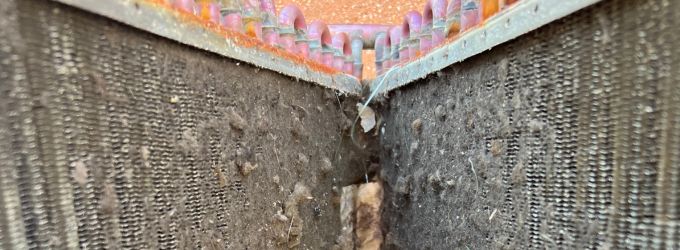
Your home’s air conditioner relies on two sets of coils to cool your home: the evaporator coil (inside) and the condenser coil (outside). When these coils get dirty, they lose their ability to transfer heat effectively, forcing your system to work harder, which raises your energy bills and increases the risk of a breakdown.
As your trusted HVAC provider in St. Louis, MO, we’ve prepared this guide to show you what you can safely do yourself and when professional service is required to ensure peak performance.
Why Coil Cleaning is Essential
Dirty coils act as insulation, blocking heat transfer. Studies have shown that dirt buildup on the coils can increase an AC system’s energy usage by 30% or more. Regular cleaning protects your investment and provides three key benefits:
- Maximum Efficiency: Restores the unit’s ability to transfer heat, lowering energy consumption.
- Reduced Repairs: Prevents the compressor from overheating due to excessive strain.
- Improved Air Quality: Prevents mold and bacteria from growing on the indoor evaporator coil.
How Often Should You Clean AC Coils?
We recommend a multi-tiered approach:
- Professional Servicing: Have your coils professionally cleaned and inspected at least once per year (ideally in the spring before heavy use). In dusty or humid environments (like St. Louis), twice per year is highly recommended.
- Homeowner Maintenance: Visually inspect and gently rinse the outdoor condenser coil monthly during the cooling season.
Can I clean AC coils myself?
Yes, you can clean the outdoor AC Condenser Coils yourself, but cleaning the indoor AC Evaporator Coils should be left to a professional. The exterior condenser coils are generally safe to clean with a garden hose after turning off the power. However, the evaporator coil is located inside the furnace or air handler, and accessing it risks bending delicate fins, causing electrical shorts, or creating a serious water leak. For safety and proper deep cleaning, always rely on a certified technician for the indoor evaporator coils.
Do You Have to Turn the AC Off to Clean the Coils?
Yes, absolutely. Attempting to clean coils while the unit is running or powered on is extremely dangerous due to high voltage.
- Turn off the thermostat: Set your thermostat to “Off.”
- Cut Power at the Breaker: Find the dedicated circuit breaker for your HVAC system in your main electrical panel and turn it off.
- Cut Power at the Disconnect: Find the safety disconnect box mounted near the outdoor unit and pull the safety handle/switch out or flip it off.
How to Clean AC Condenser Coils (Outside Unit)
The condenser coil is part of the outside AC unit. It is exposed to the elements, accumulating grass clippings, dirt, leaves, and dust. There are some basic things that homeowners can do to keep their outdoor ac unit clean, including the condenser coil. This process is generally safe for homeowners to perform.
Best Way to Clean AC Coils
- Clear Large Debris: Remove any large debris (leaves, sticks, paper) from around the base and sides of the unit. Ensure there is at least two feet of clear space around the unit.
- Remove Top Grille (Optional): If your unit design allows, remove the top grille to access the inside. Be extremely careful of the fan motor and wiring.
- Rinse from the Inside Out: Using a garden hose on a low-pressure setting (never use a high-pressure washer, which can flatten the fins), spray water from the inside of the unit outward. This pushes the trapped dirt and debris out through the aluminum fins.
- Spray Coil Cleaner: Apply a specialized foaming, non-acidic coil cleaner to the coil fins (following the manufacturer’s instructions). This helps dissolve stubborn grime.
- Rinse Thoroughly: After allowing the cleaner to soak (usually 5–10 minutes), rinse the coils thoroughly with the hose.
- Straighten Fins: If any of the delicate aluminum fins are bent, use a fin comb (available at hardware stores) to gently straighten them to restore proper airflow.
What to Use to Clean AC Coils
- Low-Pressure Garden Hose: Essential for rinsing.
- Specialized Foaming Coil Cleaner: Recommended for dissolving dirt and grease.
- Soft Brush or Fin Comb: For removing light debris and straightening bent fins.
Cleaning AC Evaporator Coils (Inside Unit)
The evaporator coil is housed within your furnace or air handler, making it much harder to access and clean. This part of the process is best left to professionals during an annual tune-up.
Can You Clean AC Evaporator Coils Yourself?
DIY cleaning of the evaporator coil is generally not recommended because:
- Accessibility: The coil is located behind access panels, often sealed with foil tape. Improper access can disrupt your HVAC system’s integrity.
- Damage Risk: The fins are extremely delicate and easily damaged.
- Drainage: Water used to clean the coil must properly drain into the condensate pan and out of the drain line. Improper cleaning can overflow the pan and cause water damage to your furnace or surrounding area.
Professional Service: Cleaning AC Evaporator Coils
When a certified technician cleans your evaporator coil without removing it (the standard professional method), the service typically includes the following steps:
- Secure Access: The technician safely cuts power and removes the access panel near or above the furnace where the evaporator coil is located, ensuring the system’s seal integrity is maintained.
- Apply Specialized Cleaner: A low-pressure sprayer is used to apply a specialized “no-rinse” evaporator coil cleaner directly to the coil. This solution is formulated to penetrate and dissolve accumulated dirt and biological matter.
- Drainage Check: The cleaner is designed to be rinsed away naturally by the condensation that forms on the cold coil during normal AC operation, carrying the dissolved dirt into the condensate pan.
- Condensate Line Flush: The technician inspects and flushes the condensate drain line to ensure it is clear of algae and debris, preventing future clogs and potential water damage.
Cost to Clean AC Coils
The cost to clean AC coils varies based on accessibility, severity of dirt, and whether you purchase a maintenance plan.
- Professional Cleaning (Tune-Up): A full professional AC tune-up, which usually includes exterior condenser coil cleaning, typically costs between $100 and $250. Deep cleaning the interior evaporator coil can add to this cost, often averaging around $250 as a standalone service, but it is often discounted when part of an annual maintenance plan.
- DIY Cost: The supplies (cleaner and fin comb) are relatively inexpensive, usually costing $15 to $30.
The best way to manage the cost to clean AC coils is to enroll in an annual maintenance plan, which bundles professional coil cleaning and inspection at a predictable price.
Need Expert Coil Cleaning and Tune-Ups? Contact Meyer Heating & Air
While you can easily manage the exterior cleaning of your condenser coil, the deep cleaning of the internal evaporator coil requires professional tools and expertise. Our certified technicians provide comprehensive AC services and tune-ups that include professional coil cleaning, safety checks, and performance optimization. We proudly serve homeowners across the region, including HVAC contractors in De Soto, MO, and reliable HVAC services in Des Peres, MO, and many surrounding communities.
Contact Meyer Heating & Air today to schedule your service and restore your system’s peak efficiency in the St. Louis, MO area.