

When winter cold snaps settle across the region, keeping your home warm and cozy becomes your primary comfort goal. However, staying warm often comes at a steep price.
When freezing outdoor temperatures force your furnace or heat pump to run continuous cycles, monthly energy bills can climb rapidly. The good news is that reducing your seasonal heating costs does not require you to bundle up in heavy blankets or keep your home uncomfortably chilly.
In this guide, we break down 10 actionable tips to reduce heating bill costs, evaluate whether common heating upgrades like heat pumps, space heaters, and baseboards genuinely save money, examine the impact of architectural features like skylights, and help you establish a more efficient winter routine.
10 Tips to Reduce Heating Bill
Lowering your monthly heating expenses starts with practical, daily adjustments to how your home captures, circulates, and retains warmth. Here are 10 proven tips to reduce heating bill expenses without compromising indoor comfort:
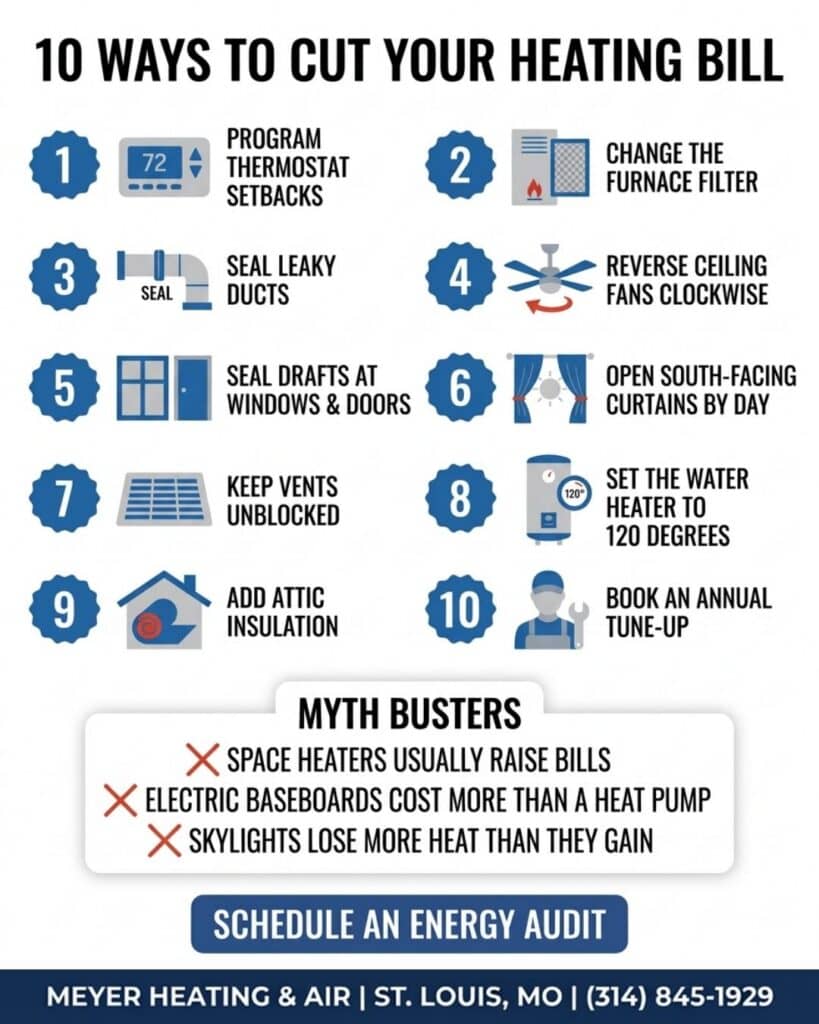
1. Optimize Programmable and Smart Thermostat Schedules
Constantly adjusting your thermostat manually forces your heating system to run erratic, fuel-heavy cycles. Installing a programmable or smart thermostat allows you to set automated temperature schedules that match your family’s daily routine. Lowering your indoor temperature by seven to ten degrees for eight hours a day, such as while you are sleeping or away at work, can reduce annual heating costs by up to ten percent. When you are home and active, aim for a balanced setpoint around sixty-eight degrees Fahrenheit for optimal efficiency.
2. Replace Clogged Furnace and Air Handler Filters Regularly
A dirty, clogged air filter is one of the most common causes of high heating bills. When an air filter becomes coated in dust, pet hair, and airborne fibers, the blower motor must work significantly harder to push air across the heat exchanger. This restriction creates high static pressure in your ductwork, extends operating run times, and causes equipment to consume excess kilowatt-hours or fuel. Inspect standard one-inch pleated filters every thirty days and replace them promptly to maintain clean airflow.
3. Seal Leaking Air Ducts in Unconditioned Spaces
A typical residential duct network loses twenty to thirty percent of its conditioned heated air through unsealed joints, separated seams, and torn flexible foil connections. When ductwork passes through unconditioned attics, basements, or crawl spaces, expensive heated air escapes before it ever reaches your living room or bedrooms. Sealing accessible duct seams with professional mastic paste or heavy-duty foil tape ensures that every cubic foot of air you pay to heat reaches your living spaces.
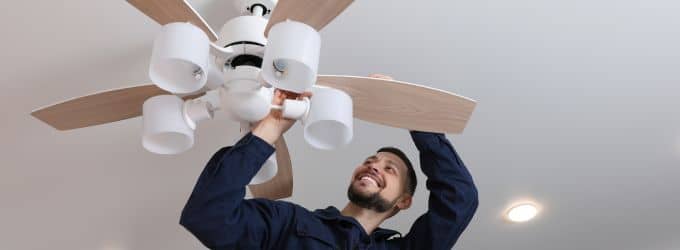
4. Reverse Ceiling Fan Rotation to Clockwise
Ceiling fans are not just for summer cooling. Because warm air naturally rises toward the ceiling, living rooms with high or vaulted ceilings often experience thermal stratification, leaving the warmest air trapped near the roofline. Most ceiling fans feature a small directional switch on the motor housing. Switching your fan to rotate clockwise at its lowest speed creates a gentle updraft that pushes warm air down along the walls and back into your occupied living zone.
5. Seal Drafts Around Windows, Doors, and Wall Penetrations
Cold outdoor air continuously infiltrates homes through hairline cracks around exterior doors, window frames, plumbing pipes, and electrical outlets. Applying fresh exterior caulk around window casings, installing durable weatherstripping along door perimeters, and placing foam gaskets behind electrical switch plates on exterior walls stops cold drafts from entering. Preventing cold air drafts stops your heating system from kicking on prematurely.
6. Leverage Passive Solar Heat with Window Coverings
The sun provides free, natural thermal warmth even during freezing winter months. During daylight hours, open south-facing and west-facing curtains, drapes, and blinds to let direct sunlight warm indoor surfaces and flooring. As dusk approaches, close all insulated curtains and shades immediately to trap the accumulated solar heat inside and block radiant heat loss through cold window glass overnight.
7. Keep Supply Registers and Return Grilles Clear
Closing supply vents in unused bedrooms or blocking registers with heavy furniture disrupts the airflow balance of your entire HVAC system. Restricting airflow increases static pressure inside sheet metal ductwork, forcing heated air out through seam leaks and straining your blower motor. Walk through your home to ensure all supply grilles and return air intakes remain completely unblocked by sofas, thick area rugs, or long draperies.
8. Lower Your Water Heater Temperature to 120 Degrees
Water heating is typically the second-largest energy expense in a residential home, accounting for roughly eighteen percent of utility consumption. Many factory water heaters are preset to one hundred and forty degrees Fahrenheit, which wastes substantial energy through standby thermal loss. Dialing your water heater thermostat down to one hundred and twenty degrees Fahrenheit provides plenty of hot water for showers and dishwashing while trimming seasonal heating expenditures.
9. Boost Attic and Crawl Space Insulation Levels
Because heat rises, an under-insulated attic acts as a thermal chimney that draws expensive heated air out through your roof. Inspect your attic floor insulation depth; building standards recommend achieving an R-value between R-38 and R-49 in our regional climate, which equates to roughly twelve to sixteen inches of blown cellulose or fiberglass batts. Upgrading thin insulation creates a thermal blanket that prevents costly heat loss through your upper ceilings.
10. Schedule Annual Professional Heating Maintenance
During a professional autumn tune-up, an HVAC technician cleans the burner assembly, inspects the heat exchanger, tests electrical contactors, measures gas pressure or refrigerant charge, and balances airflow. A calibrated heating system runs shorter, cleaner cycles, saving between ten and twenty percent on seasonal utility costs.
Do Heat Pumps Reduce Energy Bills?
Yes. Switching to a high-efficiency heat pump significantly reduces energy bills, especially when replacing electric resistance baseboards, older electric furnaces, or propane systems.
Heat pumps do not burn fuel to create heat; they extract existing heat from outdoor air and pump it inside. In mild to moderate winter weather, a modern heat pump delivers up to three times more heat energy than the electricity it consumes. For homes in climates with severe sub-freezing temperatures, pairing a heat pump with a backup gas furnace creates a dual-fuel hybrid system that automatically runs whichever heating source is most cost-effective.
Will Space Heaters Reduce Heating Bill?
Only if you use them for strict zone heating. In most situations, space heaters actually make your electric bill spike.
A standard portable space heater draws fifteen hundred watts of pure electric resistance heat, which is the most expensive way to heat a home. A space heater will only save you money if you turn your central home thermostat down to sixty-two degrees and run a single unit in the specific room you are using. If you run multiple space heaters at once, or run a space heater without turning down your central thermostat, your household electricity bills will increase sharply.
Can Baseboard Heating Reduce Heating Bills?
No. In almost all homes, baseboard heating is significantly more expensive to run than a modern central heat pump or high-efficiency gas furnace.
Electric baseboards convert electricity into heat using resistance elements, which costs far more per unit of heat than natural gas. The only cost benefit baseboards offer is independent room control, allowing you to turn off heating units completely in unused guest rooms or basements. If your home relies on electric baseboards, replacing them with a ductless mini-split heat pump will deliver far greater savings, cutting heating electricity usage by forty to fifty percent.
Do Skylights Reduce Home Heating Bills?
No. In almost every situation, skylights increase your winter heating bills rather than reduce them.
While south-facing skylights provide a small amount of daytime solar warming, that brief benefit is heavily outweighed by constant heat loss:
- Heat Rises Directly to the Glass: The warmest air in your home collects at the ceiling, right where skylights sit.
- Poor Insulation Compared to a Roof: Even high-performance skylights carry an insulating rating between R-3 and R-5, whereas an insulated ceiling has an R-value between R-38 and R-49. Heat escapes through skylight glass far faster than through a standard roof.
- Heavy Loss at Night: On cold nights and cloudy winter days, skylights continuously radiate warm indoor air out into the atmosphere.
If your home already has skylights, you can stop heat loss by installing insulated cellular shades or motorized blinds and keeping them closed from dusk until dawn.
Maximize Your Winter Energy Savings with Meyer Heating and Air
At Meyer Heating and Air, our certified technicians bring decades of hands-on technical craftsmanship to every home heating challenge. We provide comprehensive heating diagnostics, preventative tune-ups, and high-efficiency system installations tailored to the specific weather demands of our regional climate. If you are looking to lower your heating expenses and improve system reliability, our local team provides dependable heating repairs in Fenton and premier heating services in Arnold. We arrive promptly, evaluate your system efficiency honestly, and help you keep your home warm and budget-friendly all winter long.
Contact Meyer Heating and Air today to schedule your heating maintenance appointment and start saving on your winter utility bills!
Frequently Asked Questions
What temperature should I set my thermostat in the winter to save money?
The Department of Energy recommends setting your thermostat to sixty-eight degrees Fahrenheit while you are awake and at home. Lowering the setpoint seven to ten degrees while you sleep or are away at work can save up to ten percent annually on heating bills.
Is it cheaper to leave the heat on all day or turn it down when away?
It is significantly cheaper to lower your thermostat setting when you are away from home for four or more hours. A common myth suggests that a furnace works harder to reheat a cold house, but thermodynamics dictates that heat loss slows down as the indoor temperature drops closer to the outdoor temperature. Maintaining a high temperature all day causes your home to lose heat continuously, costing far more fuel.
How much money does annual furnace maintenance actually save?
Annual professional maintenance typically saves homeowners between ten and twenty percent on seasonal heating bills. Cleaning burners, calibrating gas valves, clearing blower wheels, and checking electrical switches allows the system to transfer heat efficiently and complete heating cycles faster without wasting energy.
Can closing doors to unused rooms reduce heating costs?
In homes with central forced-air heating, closing doors to unused rooms does not significantly lower heating bills and can actually harm your system. Closing interior doors can create negative air pressure within individual rooms, pulling cold outdoor air in through wall cavities and window leaks. In addition, it increases static duct pressure, which strains the central blower motor.