

Estimated reading time: 7 minutes
On a hot summer afternoon, your air conditioner works tirelessly to keep your indoor spaces cool and comfortable. While an AC system is designed to regulate temperature, it also plays a critical role in pulling moisture out of your indoor air.
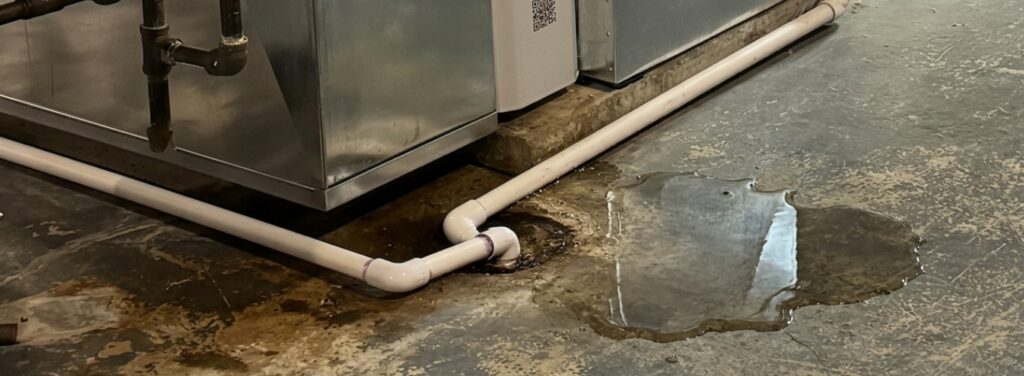
Under normal operating conditions, a central air conditioner produces a continuous amount of condensation as warm air passes across the cold cooling coils. However, when water begins pooling on the floor around your indoor air handler or leaking through your ceiling, something within the drainage system has gone wrong.
In this guide, we will explain how your system manages moisture, break down the primary reasons your AC is leaking water, and outline preventative steps you can take to protect your home from costly water damage.
How Your Air Conditioner Handles Condensation
To understand why a leak occurs, it helps to know how water moves through your cooling system. As your air conditioner cools warm indoor air, water vapor condenses on the cold indoor evaporator coil, transforming into liquid droplets.
These droplets slide down the coil into a sloped drain pan beneath the unit. From the drain pan, the water flows through a PVC pipe called the condensate drain line, which vents the water safely outside your home or into a household drain. If any part of this drainage pathway becomes blocked, cracked, misaligned, or frozen, the water will overflow into your living area.
7 Reasons Your AC Is Leaking Water
When liquid water builds up around your indoor unit, the problem usually originates from restricted airflow, a blocked drainage line, or damaged equipment. Here are seven common causes of an AC water leak.
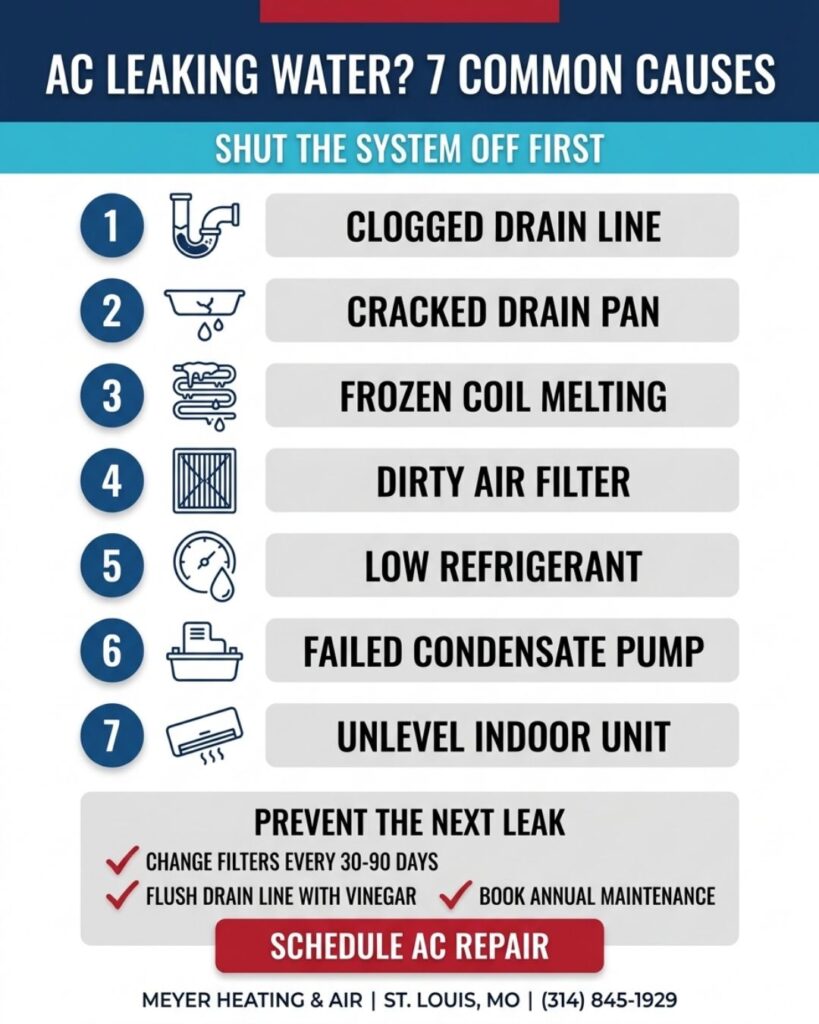
1. Clogged Condensate Drain Line or P-Trap
A clogged condensate drain line is the single most common cause of an air conditioner leaking water inside a house. Over time, warm water flowing through the PVC line creates a breeding ground for algae, mold, dirt, and dust. As debris builds up inside the pipe or P-trap, it creates a solid plug. With nowhere to go, water backs up into the indoor drain pan and overflows onto your floor.
2. Cracked, Rusted, or Damaged Drain Pan
The drain pan sits directly below your indoor evaporator coil to collect dripping condensation. In older HVAC systems, metal drain pans eventually rust and develop small holes, while plastic pans in newer systems can warp or crack over time. When the pan loses its watertight seal, water drips continuously through the cracks before it ever reaches the drain line.
3. Frozen Evaporator Coil Melting
When airflow across the evaporator coil drops or refrigerant levels run low, the temperature of the coil drops below 32 degrees Fahrenheit. Ice begins forming across the metal fins. When the system eventually turns off or enters a thaw cycle, that solid block of ice melts rapidly into liquid water. The sheer volume of melting ice overwhelms the drain pan, causing water to spill over the sides.
4. Dirty or Clogged Air Filter
A dirty air filter restricts the volume of warm air circulating through your air handler. Without enough warm air passing over the cooling coils, the refrigerant inside cannot absorb heat properly. This causes the coil to freeze over. When the system stops running and the ice melts, the sudden rush of water causes heavy indoor leakage.
5. Low Refrigerant Charge
Your air conditioner relies on a precise charge of chemical refrigerant to absorb heat from indoor air. If a leak develops in the copper coils or connecting lines, the system pressure drops. This pressure drop causes the evaporator coil to freeze over, leading to massive water spills as the ice thaws between cooling cycles.
6. Broken, Disconnected, or Powerless Condensate Pump
If your indoor air handler is installed in a basement or an interior closet below ground level, your system uses an electric condensate pump to push water upward and outside. If the pump motor fails, loses electrical power, or gets stuck on a faulty float switch, water collects in the reservoir until it overflows onto your basement floor.
7. Unlevel Indoor Unit, Dirty Coil, or Disconnected Line
If your air handler was improperly installed or has settled over time, an unlevel drain pan can cause water to pool toward one side and spill over before reaching the drain outlet. Additionally, a heavily soiled evaporator coil can cause condensation to bypass the drain pan altogether and drip directly onto interior components, while a physically disconnected PVC drain pipe will dump water directly underneath the unit.
Immediate Steps to Take When Your AC Starts Leaking Water
If you discover pooling water around your air conditioner, taking fast action prevents structural drywall damage and stops mold growth:
- Turn Off the HVAC System Immediately: Switch off your air conditioner at the thermostat to stop the condensation process and prevent further water accumulation.
- Clean Up Standing Water: Use a wet-dry vacuum or towels to clean up liquid water around your air handler, baseboards, and flooring.
- Check Your Air Filter: Inspect your air filter for heavy dust accumulation and replace it if it appears clogged.
- Inspect the Drain Line Outlet: Check the outdoor PVC drain pipe outside your home to see if water is flowing or if visible debris is blocking the opening.
How to Prevent Your AC From Leaking Water
Preventing water leaks requires keeping your air filter clean, clearing your drainage pathways, and maintaining consistent system airflow throughout the cooling season.
Replace Air Filters Regularly
Clean air filters ensure maximum airflow across your cooling coils, preventing frozen evaporator coils and melted ice spills. Change your air filter every 30 to 90 days depending on pet ownership and household dust levels.
Flush the Condensate Drain Line Periodically
Pouring a cup of distilled white vinegar down your condensate drain line access tee once every few months breaks down algae buildup, clears minor sludge deposits, and keeps water flowing freely outside.
Schedule Annual Professional HVAC Maintenance
Annual professional tune-ups allow certified technicians to inspect the drain pan for cracks, clear the condensate line with high-pressure air, measure refrigerant levels, clean dusty evaporator coils, and test safety float switches before summer heat arrives.
Resolve Your AC Leak with Meyer Heating and Air
Ignoring a water leak around your air conditioner can lead to ruined flooring, rotted drywall framing, and costly mold remediation. Identifying whether a leak is caused by a simple line clog or a serious refrigerant fault requires expert diagnostic tools.
At Meyer Heating and Air, our experienced HVAC technicians deliver fast, reliable air conditioning repair and preventative maintenance across the metro area. Whether you need urgent cooling repairs in Creve Coeur or want to schedule seasonal system maintenance in Wildwood, our local team brings professional expertise to your front door.
Contact Meyer Heating and Air today to schedule your air conditioner repair consultation and protect your home!
Frequently Asked Questions
While clean condensation water is not toxic, standing water near electrical components presents a potential shock hazard. Furthermore, unaddressed water leaks weaken floor joists, ruin ceiling drywall, and promote hidden mold growth inside wall cavities.
No. You should shut down your cooling system immediately upon discovering a water leak. Running the air conditioner continuously will generate more condensation, increasing water damage and risking serious electrical component failure inside the air handler.
Common signs of a clogged drain line include water pooling around the indoor unit, a full or overflowing drain pan, damp spots on surrounding drywall, and the system shutting down automatically via a safety overflow switch.