

Estimated reading time: 12 minutes
When preparing to upgrade or replace your home cooling system, choosing the right equipment is one of the most important decisions you will make for your property. For decades, traditional central air conditioning has been the standard for whole-home comfort across our region.
However, in recent years, ductless mini-split heat pumps have rapidly surged in popularity as homeowners seek greater energy efficiency, room-by-room temperature customization, and flexible alternatives to bulky ductwork. While both systems utilize the same fundamental refrigeration cycle to extract heat from indoor air and pump it outside, their design, installation requirements, air distribution methods, and everyday maintenance needs differ substantially.
In this guide, we will break down what separates ductless mini-splits from traditional central air conditioners, evaluate performance and energy efficiency differences, examine installation requirements, contrast maintenance responsibilities between the two systems, and help you determine which cooling solution best matches your household lifestyle and architectural layout.
How Central Air Works vs. How Ductless Mini-Splits Work
To understand the core differences between these two cooling options, it helps to examine how each system circulates conditioned air through your home.
How Traditional Central Air Systems Operate
A central air conditioning system operates as a unified, split-system network designed to condition an entire house simultaneously. A standard central setup relies on three main components:
- The Outdoor Condensing Unit: Houses the compressor, condensing coil, and exhaust fan, which compress refrigerant and release indoor heat into the outdoor air.
- The Indoor Evaporator Coil and Blower: Typically mounted inside a furnace or dedicated air handler in a basement, attic, or utility closet. The indoor blower draws warm household air across the cold evaporator coil to extract heat and moisture.
- A Network of Ductwork: Conditioned air is forced through sheet metal supply trunk lines and flexible ducts into individual room registers, while return ducts pull stagnant room air back to the air handler for re-cooling.
A central air conditioner relies on a single centrally located thermostat. When that thermostat calls for cooling, the system switches on and attempts to condition every connected room at the same time. If one of these components breaks down, homeowners schedule professional air conditioning repair to diagnose airflow restrictions or recharge refrigerant.
How Ductless Mini-Split Systems Operate
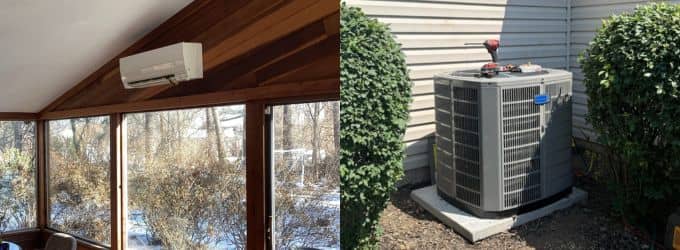
A ductless mini-split system cools your home without relying on a network of sheet metal ductwork. Instead of conditioning air in a remote utility closet and blowing it through long ducts, a ductless setup delivers conditioned air directly into individual living spaces through decentralized indoor units.
A ductless mini-split system consists of two primary elements:
- The Outdoor Heat Pump Condenser: Houses a variable-speed inverter compressor that adjusts its operational capacity dynamically to match cooling demand. Multi-port outdoor condensers can power anywhere from one to eight indoor units simultaneously.
- Indoor Air Handling Heads: Compact, quiet air handlers mounted directly onto walls, recessed into ceilings, or installed low along baseboards in specific living zones. Each indoor unit contains its own cooling coil, blower fan, and temperature sensors.
Small conduit bundles measuring roughly three inches in diameter connect each indoor head to the outdoor heat pump through a small exterior wall penetration. These bundles house insulated copper refrigerant lines, electrical communication cables, and a condensate drain hose.
Because each indoor air handler functions independently, every room or zone features its own dedicated thermostat or handheld remote, giving occupants complete control over individual room temperatures. When an individual blower motor or control board experiences an issue, technicians provide specialized ductless mini split repair to restore heating or cooling to that specific room without disrupting the rest of the house.
Key Differences: Central Air vs. Ductless Mini-Split
While both cooling options keep your living spaces comfortable, comparing their performance across key ownership factors highlights where each system excels.
1. Temperature Zoning and Individual Room Control
The greatest operational distinction between the two systems is zoning flexibility.
Traditional central air conditioning treats your home as a single uniform zone. Because one wall thermostat dictates temperatures for the whole house, rooms with heavy afternoon sun exposure or second-floor bedrooms often remain hot and stuffy, while basements and shaded first-floor rooms become uncomfortably cold.
Ductless mini-splits provide true room-by-room zoning out of the box. You can keep an upstairs home office at 68 degrees during the workday while leaving unused guest bedrooms at 75 degrees.
2. Energy Efficiency and Ductwork Thermal Loss
Energy efficiency is another area where ductless mini-splits hold a measurable advantage.
According to research from the United States Department of Energy, typical residential duct networks lose twenty to thirty percent of conditioned air through separated sheet metal seams, uninsulated attic runs, and air balance leaks. Because central systems force air through long duct runs in sweltering attics or unconditioned crawl spaces, substantial cooling capacity is lost before the air ever reaches your bedroom registers.
Ductless mini-splits eliminate ductwork entirely, delivering one hundred percent of conditioned air directly into the room where the unit is installed. Ductless systems also utilize advanced inverter compressor technology that modulates operating speed in tiny increments. Rather than turning on at full blast and abruptly shutting off like conventional single-stage central air conditioners, mini-splits run continuous, gentle cycles that consume substantially fewer kilowatt-hours.
3. Architectural Impact and Installation Flexibility
Your home layout and structural age heavily influence which system makes the most practical sense during system replacement:
- Homes with Existing Ductwork: If your home already has a well-designed, functional duct network paired with a forced-air furnace, installing a traditional air conditioner is straightforward and cost-effective. Technicians can set a new outdoor condenser and indoor evaporator coil using existing duct pathways with minimal structural modification.
- Historic Homes and Room Additions: Installing central air in historic properties that lack existing ductwork requires cutting open walls, lowering finished ceilings, and sacrificing closet space to run bulky sheet metal. In older brick homes, finished attics, sunrooms, or detached garage workshops, installing a customized ductless mini split offers the ideal solution. Installation requires only a small three-inch hole through an exterior wall, preserving original architectural details.
4. Aesthetics and Interior Space
Central air conditioning offers virtually invisible climate control. The equipment sits tucked away in utility closets, attics, or basements, leaving only flat metal registers and return grilles visible along your floors and ceilings.
Ductless mini-splits require visible indoor air handlers mounted directly inside the living space. While modern wall-mounted units feature sleek, low-profile designs, they remain noticeable fixtures on your walls. Homeowners who prefer a cleaner aesthetic can choose recessed ceiling cassettes that sit flush with drywall joists or concealed ducted units hidden in closets, though these styles carry higher installation labor expenses.
AC Ductless Mini-Split Maintenance vs. Central System
Routine care is vital for both cooling configurations to maintain peak efficiency, prevent unexpected component failures, and protect manufacturer parts warranties. However, the daily care routines and technical service procedures differ significantly between ductless mini-splits and central air conditioners.
Air Filter Maintenance: Frequent Washing vs. Scheduled Replacement
Air filtration represents the most noticeable maintenance contrast for homeowners:
- Ductless Mini-Split Filter Upkeep: Ductless indoor heads utilize reusable, high-density mesh filters tucked directly behind the front intake panel. Because these air handlers sit right inside the living space and circulate smaller air volumes, their compact filters accumulate airborne dust, pet dander, and cooking oils much faster than deep central filters. Homeowners must unclip and wash these reusable mesh filters with warm water every two to four weeks during the heavy cooling season. Allowing dirt to cake onto mini-split filters quickly suffocates the small blower wheel, causing reduced airflow and unpleasant musty smells.
- Central Air Filter Upkeep: Central systems utilize large disposable media filters installed in the main return air drop next to the furnace or air handler. Homeowners inspect standard one-inch pleated filters every thirty days and replace them every thirty to ninety days. Homes equipped with deep four-to-five-inch media filter cabinets require filter replacements only once every six to twelve months, making filter chores far less frequent than with ductless units.
Blower Wheel and Evaporator Coil Care
Both systems feature cooling coils that absorb heat and moisture, but cleaning them involves distinct technical methods during professional tune-ups:
- Ductless Coil and Blower Wheel Cleaning: Inside a ductless indoor unit, the narrow cylindrical blower wheel, commonly called a squirrel-cage fan, operates directly behind the cooling fins in a compact plastic chassis. Over months of humid cooling, a sticky film of organic dust and moisture can accumulate on the fan blades. Scheduling annual professional ductless mini split maintenance ensures deep cleaning with specialized pressurized spray kits, protective plastic wash bibs, and antimicrobial foam rinses to clear the fan wheel without damaging delicate plastic housing clips or interior drywall.
- Central Air Evaporator Coil Cleaning: In central air systems, the large metal evaporator coil is enclosed inside a sealed sheet metal plenum above the furnace. Technicians clean these large aluminum and copper fins using self-rinsing foaming coil cleaners during scheduled seasonal air conditioning maintenance. Because the central coil is located away from living room drywall, deep chemical cleaning is straightforward during routine equipment servicing.
Condensate Drainage Maintenance
Managing liquid water is critical for avoiding indoor leaks and biological growth:
- Ductless Condensate Lines: Because each indoor mini-split head extracts gallons of humidity from the room, water drains into a narrow internal pan and exits through a small gravity line or an auxiliary mini-pump. A minor algae clog in a ductless drain line can cause water to drip straight down your living room or bedroom wall, damaging paint and baseboards. Preventative maintenance involves flushing each independent indoor drain line and testing internal condensate safety floats on every indoor head.
- Central Condensate Drainage: Central air systems collect moisture in a single central drain pan located beneath the evaporator coil, venting water through standard three-quarter-inch rigid PVC piping into a floor drain or outdoor exit. Clearing a central drain line requires treating a single access tee with white vinegar or clearing the main P-trap with a high-pressure wet vacuum.
Multi-Head Complexity vs. Single-System Diagnostics
When scheduling annual professional service, equipment scale affects the inspection scope:
- Ductless Maintenance Scope: If your home utilizes a multi-zone ductless system with four indoor air handlers, a technician must inspect, clean, and test four separate blower motors, four electronic expansion valves, four condensate lines, and four sets of temperature sensors alongside the outdoor heat pump condenser. While ductless systems eliminate duct cleaning chores entirely, maintaining multiple indoor heads requires thorough attention to each individual zone.
- Central Maintenance Scope: Professional service on a central system focuses on a single indoor air handler and one outdoor condensing unit. Technicians measure static duct pressures, check blower motor capacitance, test high-voltage contactor points, inspect duct seams for conditioned air leakage, and verify refrigerant subcooling across a single circuit.
Central Air vs. Ductless Mini-Split Comparison Overview
Here is a side-by-side comparison of how central air conditioning and ductless mini-split systems compare across critical ownership factors:
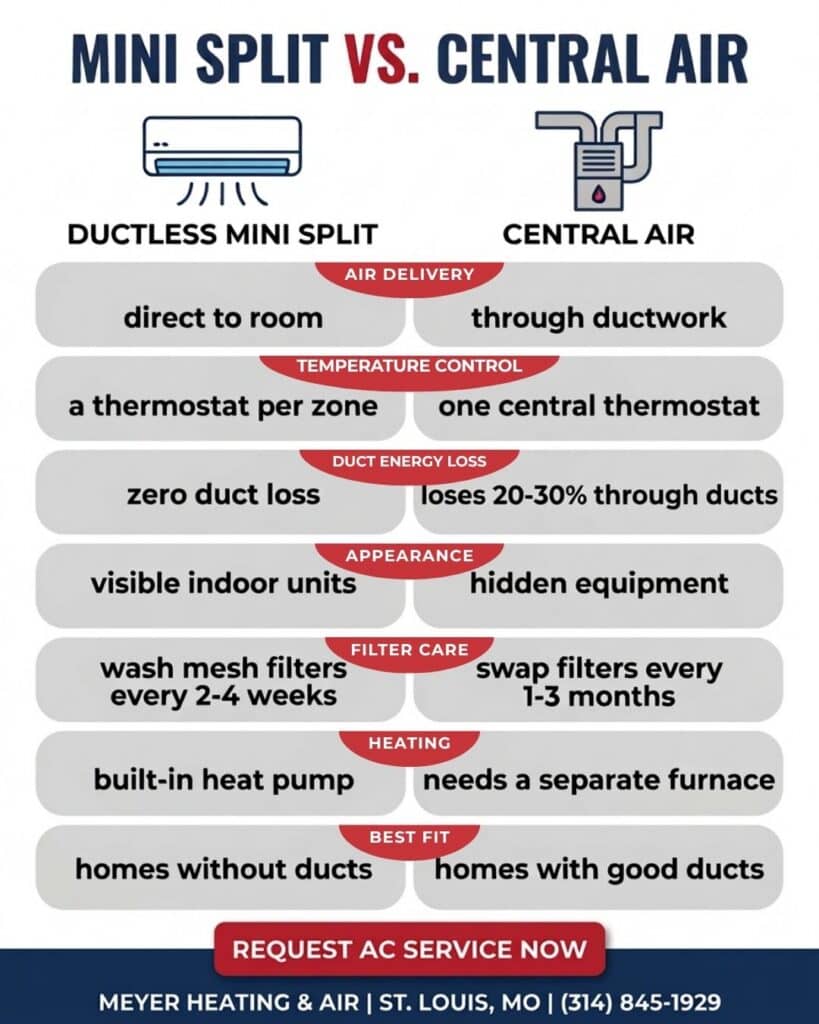
| Performance Factor | Traditional Central Air Conditioning | Ductless Mini-Split Heat Pump |
| Air Distribution | Centralized ductwork and floor or ceiling vents | Independent indoor air handlers mounted in each room |
| Temperature Control | Single central thermostat for whole house | Independent thermostat or remote for each zone |
| Ductwork Losses | Loses twenty to thirty percent of energy through ducts | Zero ductwork loss with direct room delivery |
| Visual Aesthetics | Hidden equipment with discreet vent registers | Visible air handlers mounted on walls or ceilings |
| Filter Care | Replace disposable filters every one to three months | Wash reusable mesh filters every two to four weeks |
| Heating Capability | Requires separate gas or electric furnace | Built-in reversible heat pump delivers efficient warmth |
| Best Architectural Fit | Homes with existing ductwork in good condition | Older homes without ducts, sunrooms, and additions |
Which Cooling System Is Right for Your Home?
Choosing between central air and a ductless mini-split comes down to evaluating your property layout, comfort priorities, and project budget.
Choose Central Air Conditioning If:
- Your home already features a modern, properly sized duct network in good physical condition.
- You prefer hidden HVAC equipment that leaves interior wall surfaces completely clear.
- You want the lowest upfront replacement cost when swapping out an existing central air conditioner.
- You prefer simple filter upkeep that requires changing a single disposable filter every few months.
Choose a Ductless Mini-Split System If:
- Your home has historic architecture, plaster walls, or radiant heat that lacks existing ductwork.
- You want customized, independent room-by-room temperature control across family members.
- You are finishing a room addition, sunroom, converted attic, or garage workshop where extending central ductwork is impractical.
- You want to eliminate the twenty to thirty percent energy waste caused by leaky attic ducts.
- You want a highly efficient dual-function appliance that provides both air conditioning in the summer and supplementary heating in the winter.
Elevate Your Home Comfort with Meyer Heating and Air
At Meyer Heating and Air, our certified technicians bring decades of hands-on technical craftsmanship to every residential comfort challenge. We provide complete air conditioning services for split-system homes, as well as comprehensive ductless mini split services for properties seeking efficient room-by-room control. If you are comparing cooling options for your home, our local team provides dependable air conditioning installation in Clayton and premier cooling services in Ladue. We arrive promptly, conduct detailed cooling load calculations, explain your equipment options honestly without high-pressure sales tactics, and install systems built to deliver lasting, balanced comfort for decades.
Contact Meyer Heating and Air today to schedule your in-home cooling consultation and find the perfect comfort solution for your home!
Frequently Asked Questions
Can a ductless mini-split completely replace a central air conditioner?
Yes. A whole-home multi-zone ductless mini-split system can completely replace a central air conditioning unit. By connecting multiple indoor air handlers to one or two high-capacity outdoor condensers, you can cool and heat every room in your home while eliminating energy losses through sheet metal ductwork.
Do ductless mini-splits provide heating as well as cooling?
Yes. Ductless mini-splits are reversible air-source heat pumps. In the summer, they extract indoor heat and release it outdoors to cool your home. In the winter, the refrigeration cycle reverses, allowing the system to absorb ambient heat from outdoor air and deliver steady warmth inside. Advanced hyper-heating mini-split models continue producing reliable heat even when outdoor winter temperatures drop below zero degrees Fahrenheit.
Which system lasts longer: central air or a ductless mini-split?
Both systems offer similar operational lifespans when properly maintained. A conventional central air conditioner typically lasts fifteen to twenty years. High-grade ductless mini-split systems also last between fifteen and twenty years. Because ductless systems utilize variable-speed inverter compressors that experience fewer violent startup cycles, internal motor components often experience less mechanical wear over time.
Is maintenance more expensive for a ductless mini-split than central air?
Maintenance costs are comparable, but multi-zone ductless systems can take slightly longer for a technician to service because each indoor air handler requires independent inspection. Homeowner filter maintenance for ductless units costs less because the mesh filters are washable and reusable, eliminating the ongoing expense of purchasing disposable pleated replacement filters.