

Estimated reading time: 9 minutes
Investing in a heat pump is one of the smartest ways to keep your home comfortable year-round. Because a heat pump handles both cooling in the summer and heating in the winter, it serves as the complete comfort engine for your household.
However, because heat pumps operate in all four seasons rather than sitting idle for months at a time, homeowners frequently wonder how many years of reliable service they can realistically expect.
In this comprehensive guide, we will break down what is the average lifespan of a heat pump, answer whether a heat pump can last 30 years, explore how long ductless heat pumps last, outline practical steps to increase heat pump lifespan, and examine how proper maintenance extends heat pump lifespan to protect your investment.
What Is the Average Lifespan of a Heat Pump?
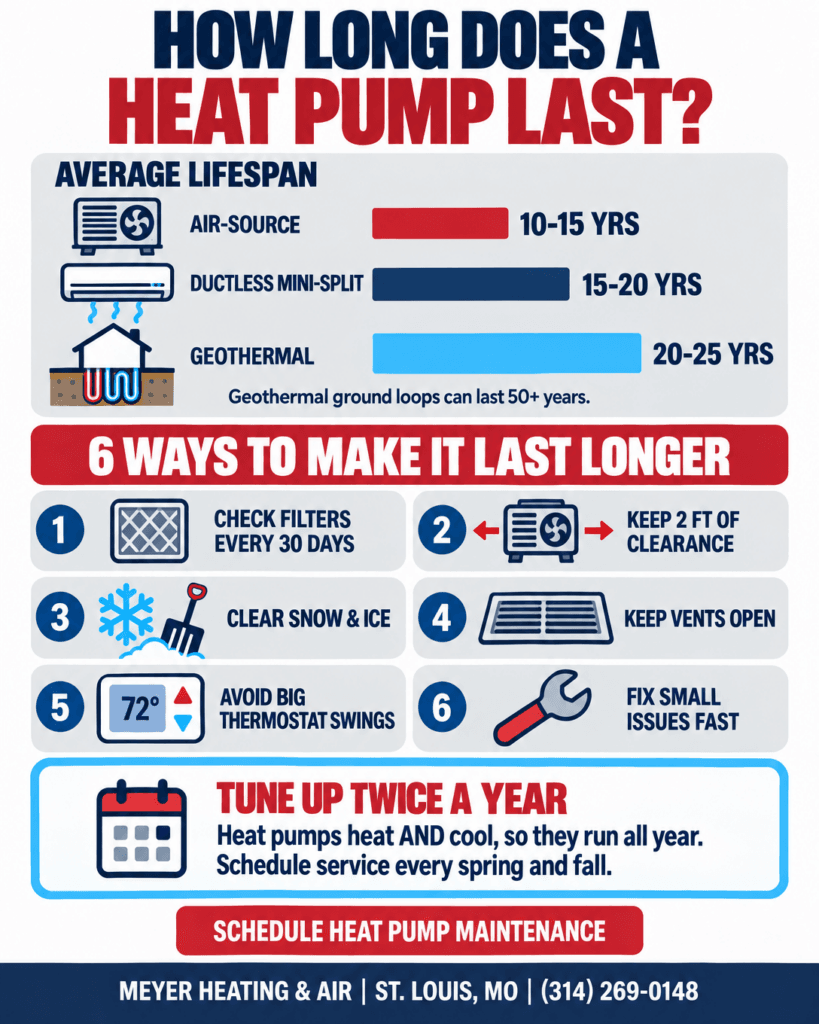
On average, the typical lifespan of a residential air-source heat pump is between 10 and 15 years. With exceptional installation practices and routine semi-annual maintenance, many units reliably reach 15 to 20 years.
To put this timeframe in perspective, traditional standalone central air conditioners often last 15 to 20 years, while gas furnaces regularly reach 15 to 25 years. The difference in operational lifespan comes down to simple workload:
- Traditional Split Systems: A standalone furnace runs only during the cold winter months, resting throughout the spring, summer, and early autumn. Conversely, an air conditioner runs primarily from late spring through late summer.
- Heat Pumps: A heat pump works double duty. It circulates refrigerant to cool your living spaces in July, then reverses its refrigeration cycle to warm your home throughout December and January. Because the compressor, outdoor fan, and indoor blower run throughout the entire year, the system accumulates operating hours twice as fast as single-season equipment.
While running year-round means earlier natural wear and tear, modern inverter-driven compressor technology has significantly narrowed the gap, providing smooth, variable-speed operation that reduces the mechanical strain experienced by older single-stage units.
Can a Heat Pump Last 30 Years?
The short answer for a standard air-source heat pump is no. It is exceptionally rare for an outdoor air-source heat pump to reach 30 years of operational service.
Continuous exposure to outdoor weather swings, summer heat waves, winter freezing rain, and high-voltage electrical cycling makes reaching 30 years virtually impossible for an exterior condensing unit. By the time an air-source heat pump reaches 15 to 18 years, major components like the compressor, reversing valve, and condenser fan motor have completed hundreds of thousands of operating cycles, and repair costs usually exceed the remaining value of the machine.
How Long Do Geothermal Heat Pumps Last?
There is one notable exception to this rule: geothermal ground-source heat pumps.
Geothermal systems utilize an underground loop field buried four to six feet beneath the earth or drilled hundreds of feet deep into bedrock. While the indoor mechanical heat pump cabinet typically lasts 20 to 25 years, the underground high-density polyethylene ground loop pipes can easily last 50 years or longer. Because ground-source equipment does not sit outdoors exposed to rain, snow, and extreme ambient air swings, it experiences far less environmental wear than an air-source system.
How Long Do Ductless Heat Pumps Last?
Ductless mini-split heat pumps typically last between 15 and 20 years, often outlasting conventional ducted heat pumps by several seasons.
Several engineering factors contribute to the impressive longevity of ductless mini-split systems:
- Variable-Speed Inverter Technology: Traditional ducted systems turn on at 100 percent capacity and abruptly shut down multiple times per hour, causing significant electrical surges and mechanical friction. Ductless units use modulating inverter compressors that speed up and slow down gradually, maintaining steady comfort without violent starts and stops.
- Absence of Ductwork Static Pressure: Ductless air handlers push air straight into individual rooms, eliminating the static pressure resistance caused by dirty, leaky, or undersized sheet metal ducts. Reduced airflow resistance places less thermal and physical strain on indoor blower fan motors.
- Independent Zonal Operation: Because ductless indoor heads operate independently, you only run units in occupied rooms. Reducing unnecessary operational runtime on inactive indoor heads prolongs the functional life of internal electronics and valves.
How to Increase Heat Pump Lifespan
While every mechanical system eventually succumbs to age, homeowners have significant control over how quickly that aging process occurs. Here are the most effective ways you can increase heat pump lifespan and keep your equipment running at peak efficiency:
1. Replace Air Filters on a Strict Schedule
A clogged air filter is the number one cause of premature heating and cooling failures. When a filter becomes caked with pet hair, dust, and lint, airflow across the indoor coil drops drastically. This airflow starvation forces the blower motor to work harder, elevates electrical draw, and can cause the indoor coil to freeze in summer or the compressor to overheat in winter. Inspect standard one-inch pleated filters every 30 days and replace them promptly to maintain clean, unrestricted airflow.
2. Maintain a Two-Foot Clearance Around the Outdoor Unit
The outdoor heat pump cabinet requires an open buffer zone to draw in exterior air and exchange thermal energy. Throughout the year, autumn leaves, weeds, tall grass clippings, and garden mulch gather around the base of the metal cabinet. Clear away all vegetation, maintain at least two feet of open clearance around the perimeter, and trim back low-hanging tree branches to ensure proper outdoor airflow.
3. Clear Snow and Ice Buildup During Winter Freezes
While heat pumps feature automatic defrost cycles to melt normal frost accumulation off the outdoor coil, heavy winter blizzards and roof runoff can create severe ice dams. If snow drifts encase the outdoor unit, gently shovel a perimeter path around the cabinet. Ensure roof gutters directly above the heat pump are sealed and clear so melting water does not drip onto the fan grille and freeze the motor solid. Never strike coils with shovels or sharp tools, as punctured copper lines cause immediate refrigerant failure.
4. Keep Indoor Registers and Grilles Open and Unblocked
Closing supply vents in unused rooms increases static air pressure inside your ductwork. This excess resistance strains the blower wheel, leaks conditioned air through duct seams, and causes severe temperature swings across coils. Keep at least 85 to 90 percent of all supply registers and return air intakes open and unobstructed by furniture, thick rugs, or long drapes to ensure balanced system pressures.
5. Use Smart Thermostat Setbacks Wisely
Constantly moving your thermostat up and down forces a heat pump to work harder than necessary, often triggering expensive auxiliary electric resistance heat strips that drive up utility bills. Instead, install a programmable or smart thermostat to maintain consistent, gradual schedules. Avoid making sudden temperature adjustments larger than three degrees at a time so your variable-speed inverter can ramp up smoothly and gently.
6. Address Minor Operational Issues Immediately
Small mechanical anomalies never fix themselves. If you notice unusual humming sounds, weak airflow, faint rattling, or brief clicking noises upon startup, schedule an inspection right away. Ignoring a weakening run capacitor or a slightly slipping fan belt forces the compressor motor to pull heavy locked-rotor amperage, turning an inexpensive parts replacement into a total system failure.
How Proper Maintenance Extends Heat Pump Lifespan
The most influential factor determining whether your heat pump retires at year 10 or thrives past year 15 is consistent professional maintenance. Operating an all-season comfort system without routine tune-ups is like driving a vehicle for 100,000 miles without changing the motor oil or checking fluid levels.
Professional preventative maintenance prolongs equipment life through critical technical interventions:
Electrical Diagnostics and Capacitance Verification
Technicians test start and run capacitors using calibrated multimeters to verify that microfarad output remains within manufacturer design limits. Replacing a weak capacitor before it fails completely protects the compressor motor from high-voltage startup damage. Technicians also tighten loose electrical connections and clean pitted contactor switches to prevent erratic power delivery.
Refrigerant Charge and Leak Management
Heat pumps operate as closed-loop systems requiring an exact refrigerant weight. Running a system with even a 10 percent refrigerant undercharge drops operating pressures, forcing the compressor to run hotter and longer to transfer heat. Technicians measure operating superheat and subcooling values to ensure optimal refrigerant charge, locating and sealing minor pinhole leaks before internal motor windings overheat.
Coil Cleaning and Airflow Balancing
Over months of seasonal use, outdoor coils collect lawn dust, road dirt, and tree sap, while indoor coils gather airborne fibers. Technicians treat both coils with specialized cleaning solutions, removing insulating grime blankets. Keeping heat exchange surfaces clean lowers head pressures, allowing the compressor to circulate refrigerant smoothly with significantly less physical wear.
Defrost Cycle and Reversing Valve Testing
Technicians test the automated defrost control board, temperature sensors, and reversing valve solenoid. Ensuring the system enters and exits defrost mode cleanly stops the outdoor unit from encasing itself in solid ice during winter freezes, protecting the compressor from liquid refrigerant floodback.
Protect Your Comfort Investment with Meyer Heating and Air
At Meyer Heating and Air, our certified technicians bring decades of hands-on expertise to every residential comfort challenge. We specialize in precision tune-ups, seasonal preventative agreements, and turnkey heat pump installations tailored to regional climate demands. If you are looking to maximize the longevity of your existing system or are considering an upgrade to a high-efficiency model, our local team provides dependable heat pump maintenance in Chesterfield and premier heating and cooling services in Fenton. We arrive promptly, inspect your equipment thoroughly, explain our findings honestly without high-pressure sales tactics, and keep your home comfortable for years to come.
Contact Meyer Heating and Air today at (314) 269-0148 or schedule your heat pump maintenance appointment online!
Frequently Asked Questions
What are the main signs that a heat pump is reaching the end of its lifespan?
Key indicators of an aging heat pump include rising monthly electric bills, frequent breakdowns requiring expensive repairs, loud grinding or clunking noises from the compressor, inconsistent room temperatures, and the system struggling to keep up with moderate outdoor temperatures. If your unit is over 12 to 15 years old and repair costs approach half the value of a replacement, investing in a new system is the smarter financial choice.
Should I replace my heat pump before it completely breaks down?
Yes. Planning a proactive heat pump replacement when your unit reaches 12 to 15 years allows you to research equipment options, take advantage of seasonal manufacturer rebates, secure federal tax credits, and avoid an emergency breakdown during an extreme heatwave or winter freeze.
How often should a heat pump receive professional maintenance?
Because a heat pump provides both heating and cooling year-round, it should receive professional service twice per year. Schedule a cooling tune-up in early spring before the summer heat arrives, and schedule a heating tune-up in early autumn before winter temperatures drop.
Does a heat pump compressor last as long as the rest of the unit?
In a well-maintained system, the compressor often lasts the entire 10 to 15 year lifespan of the heat pump. However, operating with dirty filters, uncleaned coils, low refrigerant levels, or failing electrical capacitors can overheat motor windings and cause premature compressor burnout within 7 to 10 years.