

Estimated reading time: 9 minutes
When heating and cooling older homes without existing ductwork, adding comfort to a newly finished sunroom, or fixing persistent hot spots in second-floor bedrooms, traditional central HVAC systems are not always the most practical choice. In recent years, ductless mini-split heat pumps have surged in popularity across our region.
Ductless systems offer whisper-quiet zoned heating and cooling, eliminate ductwork energy losses, and deliver class-leading energy efficiency. However, because every home layout and comfort requirement is distinct, installation pricing can vary widely.
In this comprehensive pricing guide, we will break down the average cost of installing a ductless mini-split, explore pricing by the number of indoor zones, examine the primary variables that impact your investment, analyze whether it is cheaper to install a ductless mini-split in the winter, and highlight how to get the greatest return on your investment.
What is the Average Cost to Install a Ductless Mini-Split?
On average, the total cost to install a ductless mini-split system ranges from $3,500 to $17,000 for equipment, materials, and certified technical labor.
For a single-zone setup designed to heat and cool an isolated room or garage workshop, homeowners typically spend between $3,500 and $5,500. For multi-zone installations designed to condition several rooms or replace a central HVAC system across an entire house, total investments generally range from $8,000 to $17,000 or more.
A complete turnkey installation includes three primary components:
- The Outdoor Condenser Unit: Houses the variable-speed inverter compressor, fan motor, and expansion valves that extract or reject thermal energy.
- Indoor Air Handlers: Mounted on walls, ceilings, or floors to deliver conditioned air directly into individual living zones.
- Refrigerant Line Sets and Electrical Connections: Includes insulated copper tubing, electrical communication wiring, condensate drainage lines, and exterior protective line hide covers that connect indoor units to the outdoor condenser.
Because labor requirements and equipment capacities change dramatically based on how many rooms you wish to condition, the overall number of zones serves as the largest driver of total cost.
Ductless Mini-Split Cost by Number of Zones
Zoning is the greatest functional advantage of ductless systems. Rather than forcing one central thermostat to dictate temperatures across the whole house, each indoor unit features its own independent controls. Here is how installation costs scale across common residential zone configurations:
Single-Zone Mini-Split Installation Cost
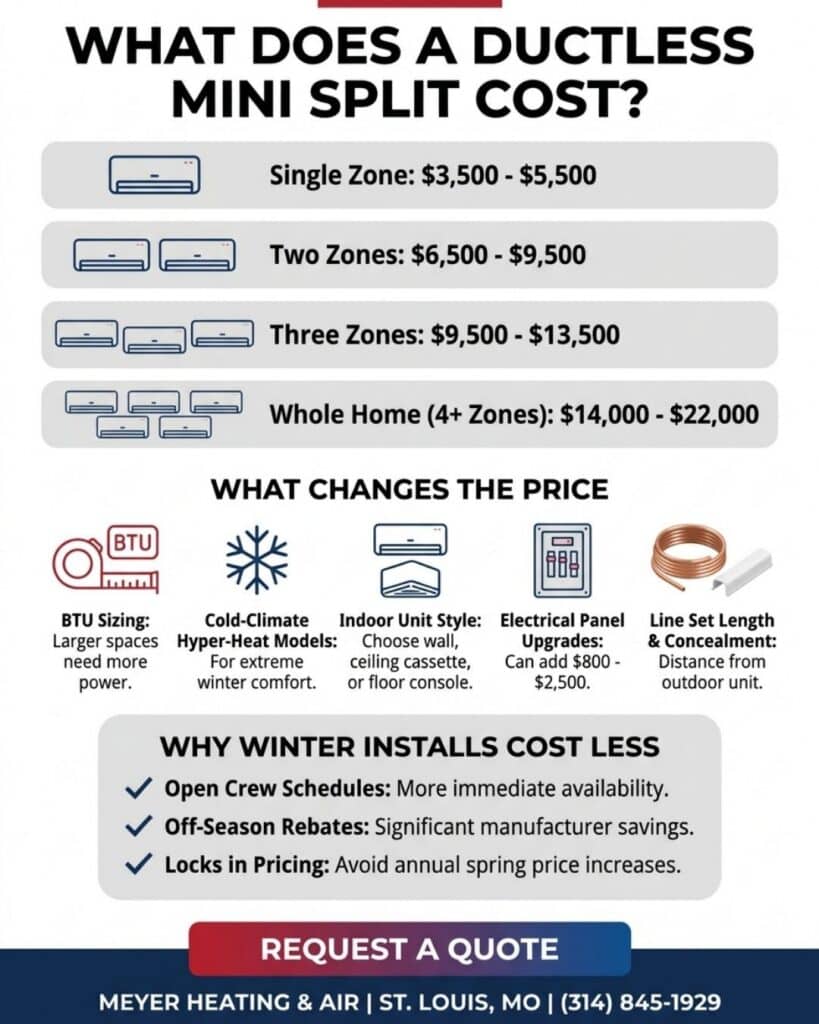
A single-zone setup pairs one outdoor condenser with one indoor air handler. Total turnkey installation for a single-zone unit typically ranges between $3,500 and $5,500.
Single-zone systems are the ideal solution for:
- Sunrooms, three-season rooms, and enclosed porches.
- Finished basements or converted home theaters.
- Detached garages and backyard workshops.
- Bonus rooms located above garages that overheat in the summer.
- Architectural room additions where tying into existing ductwork is cost-prohibitive.
Two-Zone Mini-Split Installation Cost
A two-zone system pairs one multi-port outdoor condenser with two independent indoor air handlers. Turnkey installation for a two-zone setup generally ranges from $6,500 to $9,500.
This configuration is particularly popular for split-level homes, master bedroom suites with adjoining home offices, or two distant bedrooms on an upper floor that struggle with weak airflow from a central air conditioner.
Three-Zone Mini-Split Installation Cost
A three-zone installation pairs a larger-capacity outdoor heat pump with three separate indoor air handlers. Total turnkey pricing typically ranges between $9,500 and $13,500.
A three-zone configuration allows homeowners to condition multiple key areas, such as a primary living room, a kitchen and dining area, and a master bedroom wing, granting each family member independent temperature control.
Whole-Home (Four or More Zones) Installation Cost
For homeowners replacing an entire central heating and cooling system, or older historic properties that lack any ductwork, a whole-home ductless setup utilizing four, five, or six indoor zones typically ranges between $14,000 and $22,000.
While the initial investment is significant, whole-home mini-split systems completely eliminate conditioned air loss through leaky sheet metal ducts, allowing homeowners to reduce monthly heating and cooling energy consumption by twenty to thirty percent.
Key Factors Influencing Ductless Mini-Split Installation Costs
Beyond the number of indoor zones, several technical and structural variables influence where your project lands within the pricing spectrum:
System Heating and Cooling Capacity (BTU Sizing)
Air handlers and condensers are sized in British Thermal Units, commonly called BTUs, or tonnage. A small 9,000 BTU unit designed for a 350-square-foot bedroom costs less than an 18,000 or 24,000 BTU unit designed for an open-concept living area. Installing undersized equipment leads to continuous operation and poor comfort, while oversized units short cycle and struggle with humidity control. A certified technician performs a detailed Manual J load calculation to determine the exact BTU capacity your layout requires.
Energy Efficiency and Cold-Climate Heating Performance
Standard ductless heat pumps operate efficiently until outdoor temperatures drop near freezing, at which point their heating output naturally declines.
For dependable winter warmth in our regional climate, many homeowners invest in specialized cold-climate or hyper-heating mini-split models. These advanced systems utilize flash-injection compressor technology to deliver 100 percent heating capacity down to five degrees Fahrenheit and continue producing warmth at sub-zero temperatures. Hyper-heat models carry a ten to twenty percent higher equipment premium, but they provide reliable, fossil-fuel-free warmth during severe winter freezes.
Indoor Air Handler Mounting Style
The physical style of the indoor air handler affects both equipment pricing and installation labor:
- Wall-Mounted Units: The most common and economical option. Wall units mount high on an exterior or interior wall, requiring minimal structural modification.
- Ceiling Cassettes: Recessed flush into the ceiling between standard floor joists. Ceiling cassettes provide a sleek, unobtrusive profile and multi-directional airflow, but they require extra carpentry labor, insulation sealing, and framing adjustments.
- Floor-Mounted Consoles: Installed low along baseboard walls, mimicking the look of traditional radiators. Floor units are ideal for finished attics with sloped knee walls where vertical wall space is limited.
- Ducted Concealed Mini-Splits: Small, hidden air handlers placed in closets or attics that feed two or three small supply vents via short duct runs. These offer invisible aesthetics while retaining zoned control, though sheet metal work increases overall labor expenses.
Electrical Service Capacity and Subpanel Upgrades
Ductless condensers require dedicated high-voltage 208 or 230-volt double-pole electrical circuits. If your main electrical panel is older or fully populated, an electrician may need to install a subpanel or upgrade your service from 100 amps to 200 amps before the HVAC equipment can be safely connected. Electrical upgrades typically add between $800 and $2,500 to the total scope of work.
Line Set Length and Architectural Concealment
Connecting the outdoor unit to distant second-floor bedrooms requires running refrigerant lines, electrical cabling, and drain pipes across long distances. Navigating around wall studs, through finished ceilings, or down multiple stories requires additional copper piping and protective exterior line hide channeling to maintain clean curb appeal.
Is It Cheaper to Install a Ductless Mini-Split in the Winter?
Homeowners often ask whether scheduling installation during the colder months yields financial advantages. In many scenarios, yes, installing a ductless mini-split in the winter is cheaper or delivers superior overall value compared to booking during peak spring and summer rushes.
Here is why winter installation can save you money:
Off-Season Contractor Flexibility and Promotional Pricing
Spring and summer represent the busiest seasons for HVAC companies. When the first sweltering ninety-degree heat waves arrive, service queues fill up quickly with emergency central air conditioner replacements, leaving contractors with little flexibility.
During the winter months, installation schedules are often more open. To keep installation crews steadily active, heating and cooling contractors frequently run seasonal promotions, offer discounted diagnostic fees, or provide reduced labor rates on ductless heat pump installations.
Manufacturer Equipment Rebates and Incentives
HVAC equipment manufacturers like Mitsubishi, Daikin, and Carrier often partner with distributors during the off-season to offer manufacturer rebates, extended labor warranties, or zero-percent promotional financing terms. Booking your project in December, January, or February allows you to take advantage of these winter promotional packages.
Protecting Your Budget from Spring Price Hikes
Across the construction and home services industry, equipment manufacturers historically update their wholesale pricing each spring. Rising raw material costs for copper, aluminum, and electrical components cause price increases that take effect at the start of the warm season. Scheduling your installation in the winter locks in current inventory pricing, protecting your investment from annual spring rate hikes.
Immediate Year-Round Value
Unlike traditional air conditioners that sit unused until late spring, a ductless mini-split is a reversible heat pump. Installing the system during the winter allows you to immediately enjoy supplementary or primary heating during cold winter nights, providing instant energy savings before summer cooling demand even begins.
Upgrade Your Zoned Comfort with Meyer Heating and Air
At Meyer Heating and Air, our certified technicians bring decades of hands-on expertise to every home comfort challenge. From single-room additions and garage conversions to whole-home ductless mini split installations, our team provides dependable ductless mini split installation in Clayton and premier heating and cooling services in Des Peres. We help you identify the perfect equipment capacity for your floor plan, navigate valuable federal tax credits, and deliver clean, dependable installations that stand the test of time.
Contact Meyer Heating and Air today to schedule your ductless mini-split consultation and receive a transparent, customized estimate for your home!
Frequently Asked Questions
How long does a ductless mini-split installation take?
A standard single-zone installation typically takes between four and six hours and is completed within a single working day. A multi-zone installation involving three or four indoor air handlers generally takes one to two working days, depending on line set routing complexity and electrical panel access.
Do ductless mini-splits use a lot of electricity?
No. Ductless mini-splits are among the most energy-efficient heating and cooling appliances on the market. They use variable-speed inverter compressors that modulate electrical consumption down to match the exact temperature demand of the room. Furthermore, eliminating ductwork stops the twenty to thirty percent thermal energy loss common in central systems, resulting in significantly lower monthly electric bills.
Can a ductless mini-split heat a home in freezing winter weather?
Yes, provided you select a cold-climate or hyper-heat model. Advanced modern heat pumps can extract ambient heat from outdoor air in sub-zero temperatures, providing steady warmth even when conditions drop to minus fifteen degrees Fahrenheit.