


Your heating and air conditioning system represents one of the largest and most critical mechanical investments on your property. During peak summer heat waves and sub-freezing winter storms, your HVAC equipment works around the clock to keep your living spaces safe, healthy, and comfortable.
In this comprehensive guide, we will examine why HVAC maintenance is important, evaluate whether routine service is truly necessary, explore its direct impact on energy efficiency, detail what happens when tune-ups are skipped, explain how to prevent emergency breakdowns, outline the most critical preventative tasks, and show how proper care protects your home from indoor mold growth.
Is HVAC Maintenance Necessary?
To put it simply, yes, HVAC maintenance is absolutely necessary. Operating an air conditioner, furnace, or heat pump without routine service is comparable to driving an automobile for tens of thousands of miles without ever changing the oil, checking the brake fluid, or inspecting the tires.
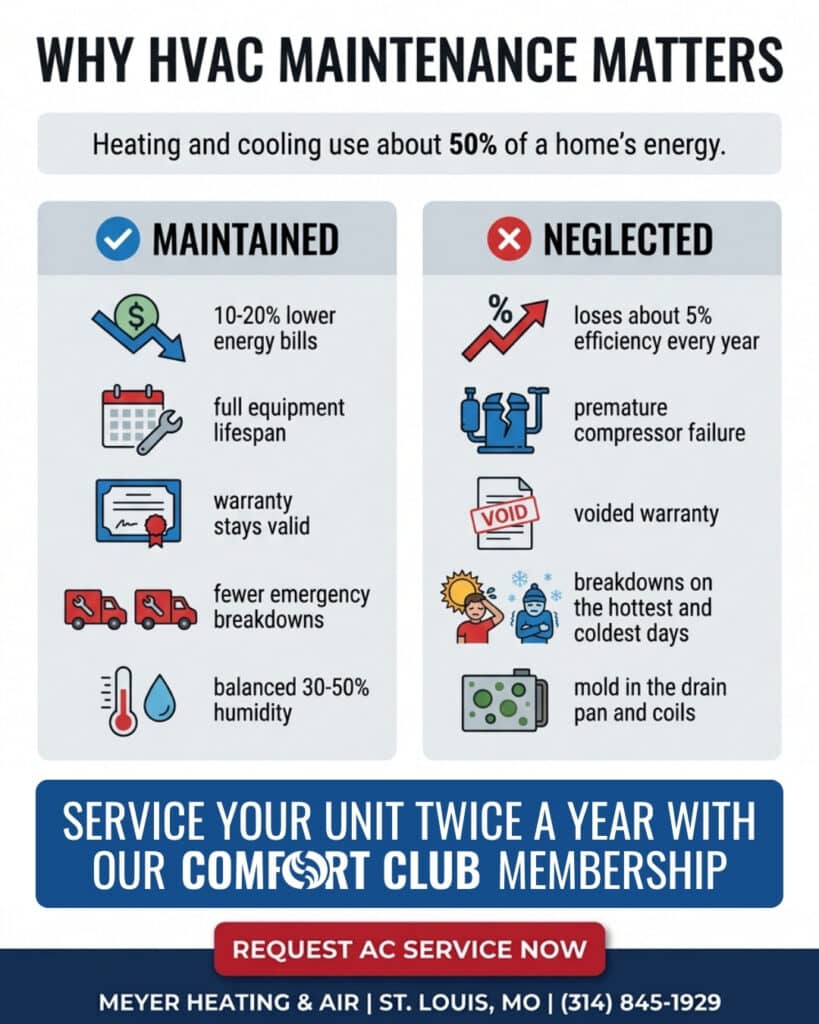
Heating and cooling systems contain heavy motors, pressurized chemical refrigeration circuits, high-voltage electrical relays, electronic printed circuit boards, and sensitive gas combustion controls. Over months of continuous operation, several natural degradation processes take place:
- Friction and Lubrication Loss: Blower and fan motor bearings experience continuous mechanical friction. Without periodic lubrication and inspection, bearings overheat, seize, and burn out the motor.
- Electrical Component Degradation: Capacitors, contactors, and relays handle high voltage every time a cycle initiates. Summer heat and electrical surges degrade internal dielectric materials, leading to weak starts and stalled compressors.
- Airflow Obstruction: Dust, pet hair, pollen, and airborne fibers bypass standard filters and settle onto delicate evaporator coils, blower fan blades, and duct walls, creating air resistance that chokes system performance.
- Vibration and Hardware Loosening: Motors and compressors produce subtle, constant vibrations that gradually loosen electrical wiring connections, gas valve fittings, and structural cabinet screws.
Routine preventative maintenance is not an optional luxury. It is an essential operational requirement that keeps your equipment safe, efficient, and dependable throughout its functional lifespan.
How Important Is HVAC Maintenance for Energy Efficiency?
Energy efficiency is one of the most compelling reasons to maintain your heating and cooling equipment. Heating and air conditioning account for approximately fifty percent of the total energy consumed in an average residential home. Even a modest drop in system performance directly impacts your monthly household utility expenses.
HVAC maintenance directly preserves peak energy efficiency through several interconnected mechanisms:
Preserving Clean Heat Transfer Surfaces
Air conditioners and heat pumps rely on clean metal fins across indoor evaporator coils and outdoor condenser coils to absorb and dissipate thermal energy. A thin film of dirt or lawn dust measuring just one-hundredth of an inch thick on an outdoor condenser coil can reduce heat transfer efficiency by over twenty percent. When heat cannot escape, the compressor must operate at elevated head pressures, drawing significantly higher electrical amperage to achieve the same cooling result.
Maintaining Optimal Airflow and Static Pressure
When filters clog, blower wheel fins become caked in grime, or indoor coils collect dust, static pressure inside your ductwork spikes. The indoor blower motor must work significantly harder to push conditioned air past these physical blockages and through distant supply registers. Regular maintenance cleans these air pathways, ensuring the blower motor operates at its engineered design specifications without drawing excess kilowatt-hours.
Calibrating Operational Charges and Controls
Air conditioners running with even a ten percent undercharge or overcharge of refrigerant experience an immediate five to twenty percent penalty in seasonal energy efficiency. Preventative maintenance includes measuring subcooling and superheat levels with digital pressure gauges to verify that refrigerant charge matches exact factory specifications, allowing your unit to deliver its rated SEER2 efficiency.
Investing in seasonal maintenance consistently saves homeowners between ten and twenty percent on seasonal utility bills, effectively paying for the service appointment through energy savings alone.
What Happens If You Skip HVAC Maintenance?
Choosing to skip seasonal tune-ups may save a modest service fee upfront, but it invariably triggers far higher expenses down the road. Heating and cooling equipment does not break down abruptly without warning; rather, unaddressed wear and tear compounds invisibly until a catastrophic failure occurs.
Here is what happens when homeowners neglect routine HVAC maintenance:
Uncontrolled Creep in Monthly Utility Bills
Without maintenance, heating and cooling equipment loses approximately five percent of its overall operating efficiency each year due to dirt accumulation, declining capacitance, and uncalibrated sensors. A system that operates at peak efficiency when installed will consume substantially more electricity or natural gas after three or four neglected seasons to produce the same indoor comfort.
Premature System Death and Expensive Component Failures
Small, inexpensive issues inevitably turn into catastrophic, multi-thousand-dollar repairs when neglected. A twenty-dollar run capacitor that has drifted outside its microfarad tolerance forces the outdoor compressor motor to pull heavy locked-rotor amperage on every startup. Within a few hot summer weeks, that failing capacitor can cook the compressor motor windings, destroying a three-thousand-dollar mechanical heart that could have operated for another decade.
Voided Equipment Manufacturer Warranties
Major heating and cooling manufacturers, including American Standard, Trane, Carrier, Lennox, and York, offer five to ten year limited parts warranties on newly installed equipment. However, reading the fine print reveals that every major manufacturer explicitly requires annual maintenance performed by a licensed HVAC contractor as a mandatory condition of warranty coverage. If an expensive heat exchanger or compressor fails and you cannot provide documented service invoices, the manufacturer can deny the parts claim, leaving you with a massive out-of-pocket repair bill.
Dangerous Household Safety Hazards
Gas furnaces and condensing heating systems burn combustible fuel to produce warmth. Over time, neglected burners suffer from improper air-to-fuel ratios, leading to incomplete combustion and excessive carbon monoxide production. Furthermore, uninspected heat exchangers can develop microscopic stress fractures that leak colorless, odorless carbon monoxide gas directly into your indoor living spaces.
How to Prevent HVAC Emergencies with Maintenance
There is an old, proven rule in home services: HVAC systems almost never break down on mild, seventy-degree spring afternoons. They fail on the most extreme days of the year, such as the hottest ninety-five-degree humid summer afternoon or the freezing sub-zero winter night when equipment is forced to run under continuous thermal load.
Preventative maintenance stops mid-season emergencies before they occur by shifting your comfort management from reactive panic to proactive prevention:
Identifying Hidden Wear Points Before Peak Weather Arrives
Scheduling an air conditioning tune-up in early spring allows a certified technician to test electrical capacitance, examine the contactor for pitted contact surfaces, check refrigerant lines for subtle oil leaks, and inspect the condenser fan motor before the first blistering heat wave arrives. Replacing a weakening twenty-dollar component during a scheduled, low-stress spring appointment prevents a frantic emergency service call when temperatures soar.
Catching Ignition and Flue Venting Faults Before Winter Freezes
Scheduling furnace maintenance in early autumn ensures that burner assemblies, flame sensors, electronic igniters, and safety limit switches are cleaned, aligned, and tested before freezing winter temperatures settle in. Clearing soot off a flame sensor or replacing an aged igniter prevents your family from waking up to a freezing home and cold air blowing through your registers in the dead of winter.
Most Important HVAC Preventive Maintenance Tasks
While simple DIY tasks like replacing return air filters and keeping tall grass trimmed back around the outdoor cabinet are essential homeowner responsibilities, a truly comprehensive preventative maintenance service requires certified technical training and specialized diagnostic instruments.
Here are the most important preventive maintenance tasks performed during a professional seasonal tune-up:
Electrical Diagnostics and Capacitance Testing
Technicians use digital multimeters and amp clamps to measure the microfarad output of start and run capacitors, checking them against manufacturer tolerance ratings. Technicians inspect the high-voltage electrical contactor for burned or pitted points, tighten all mechanical wire terminals, and measure the running amperage of the compressor and fan motors to verify that electrical circuits operate safely within factory thresholds.
Refrigerant Circuit and Operating Pressure Verification
A certified technician checks the closed-loop refrigeration lines using precision digital manifold gauges. By measuring operating suction and liquid pressures alongside pipe temperatures, the technician calculates exact superheat and subcooling values. This confirms that the refrigerant charge is balanced to factory specifications, protecting the compressor from liquid slugging while maximizing cooling capacity.
Complete Coil and Heat Transfer Surface Cleaning
Technicians chemically treat and rinse the outdoor condenser coil with specialized low-pressure cleaning solutions to remove embedded dirt, lawn clippings, and tree sap from between delicate aluminum fins. On heating systems, technicians inspect and clean the indoor evaporator coil and secondary heat exchangers to eliminate airflow blockages and maintain clean heat exchange.
Condensate System Clearing and Float Switch Calibration
Technicians clear the internal drain trap, collector box, and exterior PVC drainage piping using high-pressure vacuum equipment to flush out accumulated algae, bacterial slime, and mineral sludge. Technicians test the automated condensate overflow float switch to ensure it cuts low-voltage power immediately if water ever backs up, preventing catastrophic ceiling water leaks or floorboard rot.
Combustion Analysis and Heat Exchanger Inspection
For gas heating equipment, technicians inspect the burner flame color and shape, clean carbon crust off the flame sensor rod, and inspect the physical metal surfaces of the primary and secondary heat exchangers for hairline fractures or metal fatigue. Technicians use electronic combustion analyzers to measure draft pressure and verify that fuel is burning cleanly without producing dangerous carbon monoxide.
How Proper HVAC Maintenance Prevents Mold Growth
Indoor air quality is directly linked to the operational hygiene of your central heating and cooling equipment. In our regional climate, humid summer weather creates the exact environmental conditions required for biological contaminants like mold and mildew to flourish inside an unmaintained air conditioning system.
Proper preventative maintenance stops indoor mold growth through several critical pathways:
Eliminating Standing Moisture in Condensate Drain Pans
As your air conditioning system cools warm indoor air, it pulls gallons of liquid moisture out of your living space each day. This water collects in an internal plastic or metal drain pan beneath the cold evaporator coil. If the drain line becomes restricted by dust or algae, standing water pools in the dark pan for days or weeks, creating an ideal breeding nursery for mold colonies. Maintenance flushes this drainage pathway clear, ensuring water drains immediately outside.
Cleaning Organic Dust off Evaporator Coils
Mold spores exist naturally in outdoor air, but they require moisture, darkness, and an organic food source to germinate and spread. The indoor cooling coil provides darkness and moisture during the cooling season. When an air filter is neglected or does not fit tightly, household dust, pet dander, and skin cells bypass the filter and coat the wet cooling fins. This dust blanket serves as the organic food source that fuels aggressive mold growth directly in the central airstream. Routine professional coil cleanings eliminate this food source entirely.
Preventing High Humidity Stratification Throughout the House
An unmaintained air conditioning system running with low refrigerant, dirty coils, or a weak blower motor short cycles or struggles to complete full dehumidification cycles. When indoor relative humidity climbs above fifty percent, mold spores begin germinating across sheetrock walls, carpet fibers, and air supply grilles. Proper system calibration ensures your equipment extracts maximum humidity from indoor air, maintaining a crisp, balanced indoor climate between thirty and fifty percent relative humidity where mold cannot thrive.
Stay Ahead of Breakdowns with The Comfort Club Maintenance Plan
Remembering to book heating and cooling tune-ups before peak seasons arrive can easily slip through the cracks of a busy schedule. To remove the guesswork and make routine care effortless, Meyer Heating and Air offers The Comfort Club, a dedicated preventative maintenance agreement designed to protect your equipment year after year.
Enrolling in a maintenance plan delivers substantial long-term benefits that protect both your home comfort and your budget:
- Automated Seasonal Tune-Ups: Members receive scheduled maintenance visits, including comprehensive cooling inspections in the spring and thorough heating tune-ups in the autumn, ensuring equipment is fully calibrated before weather extremes hit.
- Priority Service Scheduling: When extreme heat waves or sub-zero blizzards hit our region and service queues fill up, Comfort Club members receive front-of-the-line priority scheduling.
- Valuable Repair Discounts: Members enjoy significant percentage discounts on diagnostic fees, replacement parts, and repair labor, saving substantial money if an unexpected component replacement is ever required.
- Reduced or Waived Emergency Fees: After-hours emergency rates can be a stressful surprise during mid-winter or holiday breakdowns. Maintenance plan membership provides discounted or waived after-hours fees.
- Documented Warranty Protection: We maintain detailed digital service records for every visit, providing the written proof equipment manufacturers require to keep your five-to-ten-year parts warranties fully valid
Trust Your Seasonal Care to Meyer Heating and Air
At Meyer Heating and Air, our certified technicians bring decades of hands-on expertise to every home comfort challenge. From comprehensive seasonal tune-ups and deep coil cleanings to electrical capacitance testing and airflow balancing, our team provides dependable hvac maintenance in Maryland Heights and premier heating and air conditioning services in Creve Coeur. We ensure your equipment operates at peak seasonal efficiency, eliminate unexpected emergency HVAC breakdowns, protect active manufacturer warranties, and deliver lasting peace of mind for your household.
Contact Meyer Heating and Air today to schedule your seasonal HVAC preventative maintenance appointment and keep your system running strong in every season!
Frequently Asked Questions
How often should preventative HVAC maintenance be performed?
Preventative HVAC maintenance should be performed twice per year. You should schedule a cooling tune-up in the spring before the summer heat arrives, and schedule a heating inspection in the autumn before freezing winter temperatures begin. Systems that run both heating and cooling continuously, such as heat pumps, particularly benefit from this semi-annual schedule.
Can routine HVAC maintenance really lower monthly electric bills?
Yes. Keeping coils clean, maintaining clean filters, verifying correct refrigerant charge, and ensuring motor bearings are lubricated reduces mechanical and electrical friction. A well-maintained system operates between ten and twenty percent more efficiently than a neglected unit, directly lowering the amount of electricity and fuel needed to condition your home.
Does skipping maintenance void my manufacturer warranty?
Yes. Nearly all major HVAC equipment manufacturers state in their warranty documentation that the limited parts and compressor warranties are contingent upon regular maintenance performed by a licensed professional. If a major component fails and you cannot provide dated service invoices demonstrating regular care, the manufacturer can reject your warranty claim.
What is the difference between homeowner DIY care and a professional tune-up?
Homeowner maintenance is primarily focused on basic cleanliness, such as changing disposable air filters every thirty to ninety days, keeping outdoor condenser cabinets clear of vegetation, and maintaining open indoor supply vents. A professional tune-up involves technical electrical testing with multimeters, measuring subcooling and superheat refrigerant pressures, testing safety switches, clearing drain lines with commercial vacuums, and conducting combustion analysis.