
Last Updated December 2025
When seeking to improve indoor air quality, the term “HEPA filter” is often mentioned as the gold standard for filtration. These filters are highly effective at trapping microscopic contaminants. However, integrating a true HEPA filter into your existing residential HVAC system comes with critical limitations. As indoor air quality specialists in St. Louis, MO, we explain what a HEPA filter is and how you can safely achieve near-HEPA-level filtration in your home.
What is a HEPA Filter? The Definition and Standard
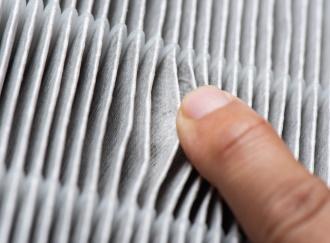
A HEPA filter is a specific type of mechanical air filter that meets a rigorous U.S. government standard for air cleaning efficiency.
What Does HEPA Stand For in HEPA Filter?
HEPA stands for High-Efficiency Particulate Air. This acronym is not a brand name; it is a performance standard.
The Filtration Standard
To qualify as a true HEPA filter, the filter must be tested and proven to remove at least 99.97% of airborne particles that are 0.3 microns in diameter. This 0.3-micron size is key because it represents the “most penetrating particle size” (MPPS) that is hardest to capture. Particles larger or smaller than 0.3 microns are actually easier for the HEPA filter media to trap.
Effectiveness: What HEPA Filters Can Remove
Due to their extremely dense structure and high efficiency, HEPA filters are capable of trapping some of the smallest and most harmful contaminants.
Does a HEPA Filter Remove Mold?
Yes, a HEPA filter is effective at removing airborne mold spores. Mold spores typically range from 1 to 20 microns in size, meaning they are easily trapped by the dense HEPA media. By removing these spores from the air, the HEPA filter helps prevent them from settling elsewhere in your home and starting new mold growth.
Does a HEPA Filter Remove Asbestos?
Yes, a HEPA filter is effective at removing asbestos fibers. Asbestos fibers typically range from 0.7 to 90 microns in width, placing them well within the size range effectively captured by the HEPA standard. This is why HEPA filtration is mandated during asbestos abatement processes.
When Is a HEPA Filter Used?
True HEPA filters are utilized in environments where air purity is critical:
- Hospitals and Medical Facilities: Used in isolation rooms and operating theaters.
- Electronics Manufacturing: Used in “clean rooms” to prevent contamination.
- Dedicated Air Purifiers: Used in portable or whole-house air purifiers that are specifically designed for this level of filtration.
Can You Replace HVAC Filters with HEPA Filters?
This is the most crucial question for homeowners, and the answer, for standard residential systems, is generally no, you cannot safely replace your HVAC filter with a true HEPA filter.
The Problem with Standard HVAC Systems
True HEPA filters are extremely dense. Placing one in a standard residential furnace or air handler causes a massive increase in static pressure (resistance to airflow).
- Risk of Damage: The resistance can burn out your system’s fan (blower) motor or cause the heat exchanger to overheat, leading to costly damage or system failure.
- Ineffective Filtration: Because the air handler cannot push air through the dense filter, the air finds the path of least resistance – usually leaking around the filter and through the duct seams – meaning the air bypasses the filter entirely.
The Solution: HEPA Bypass or Dedicated Filtration
To achieve near-HEPA filtration in a residential setting, professionals recommend specialized whole-house solutions:
- High-MERV Filters (MERV 13-16): Use the highest MERV-rated filter that your HVAC system is certified to handle. This provides excellent filtration (capturing up to 90% of particles 0.3–1.0 microns) without damaging your blower motor.
- Dedicated HEPA Bypass System: This professional system diverts a portion of your home’s air through a separate, powerful fan and HEPA filter unit, and then returns the cleaned air to the main ductwork. This setup ensures true HEPA filtration without placing excessive strain on your main HVAC blower.
Maintenance and Longevity of HEPA Filters
Understanding how to care for a HEPA filter is essential to maintain its effectiveness.
Can You Clean a HEPA Filter and Reuse It?
No, you cannot clean a HEPA filter and reuse it. The filter media achieves its efficiency by trapping particles within its dense fibers. Attempting to wash, vacuum, or blow out a HEPA filter will damage the delicate fibers, create holes in the media, and permanently compromise the filter’s efficiency, rendering it useless.
How Often Do I Need to Replace a HEPA Filter?
The frequency of replacement depends entirely on the filter’s application and the manufacturer’s recommendation:
- Portable Air Purifiers: Filters may last anywhere from 6 to 12 months.
- Whole-House Bypass HEPA Systems: Filters are larger and can often last for 1 to 2 years under normal operating conditions.
Always follow the manufacturer’s guidance, especially in homes with pets or severe allergies, where filters may need replacement more frequently.
Need Advanced Air Filtration? Contact Meyer Heating & Air
Standard filters often fall short when dealing with fine particulates. Whether you are dealing with dust from renovation projects or persistent allergens, our indoor air quality experts are here to help. Our service area covers a wide range of locations, including professional HVAC contractors in Crestwood, MO, and reliable contractors for HVAC systems in Creve Coeur, MO. No matter where you are in the metro area, we can customize a filtration plan for your specific needs.
Contact Meyer Heating & Air today to discuss upgrading your filtration system or installing a dedicated HEPA bypass unit for the cleanest air possible.