

Estimated reading time: 5 minutes
When winter weather brings freezing temperatures, your home relies on a dependable heating system to maintain safe, comfortable indoor living. A gas or electric furnace often gives warning signals long before it fails completely.
Recognizing these subtle warning signs allows you to schedule timely repairs before a minor issue turns into an emergency system breakdown on the coldest night of the year. In this guide, we will break down the primary signs your furnace needs professional repair, explain when a heating unit is beyond repair, and help you make the right choice for your home.
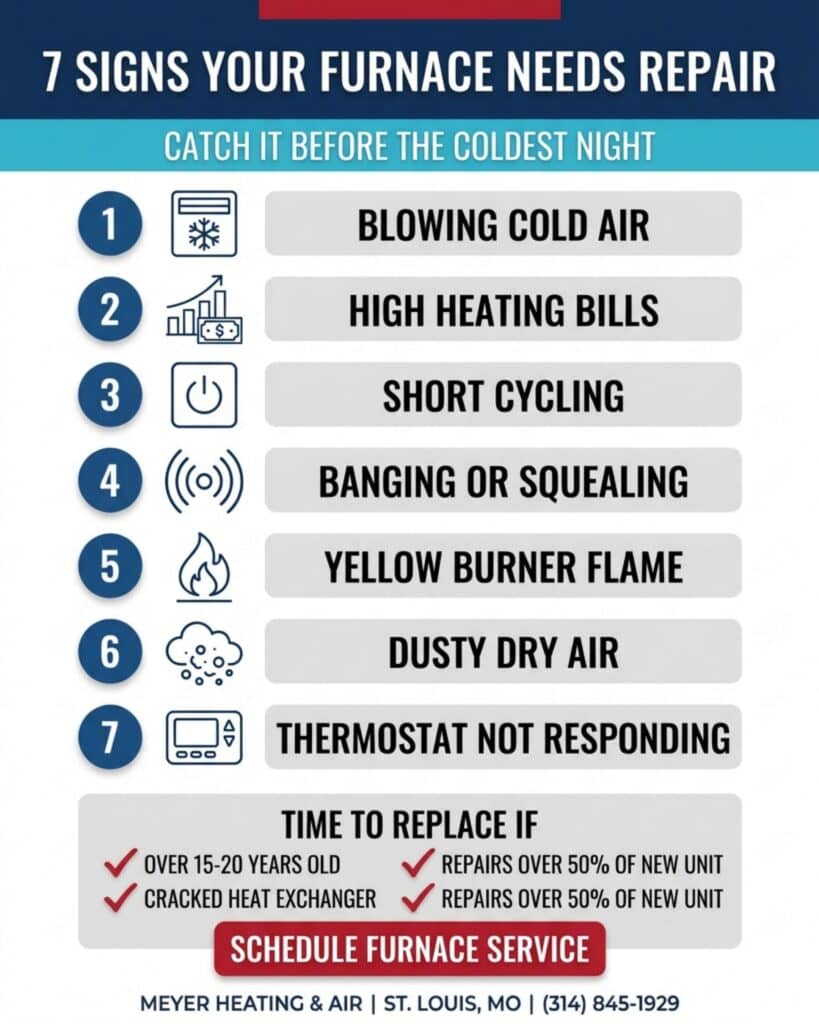
7 Signs Your Furnace Needs Repair
If your heating system is struggling, it will communicate through strange noises, rising energy bills, and inconsistent performance. Here are seven warning signs that you should schedule a furnace repair.
1. Inadequate or Cold Air Flowing from Supply Vents
If your furnace blows lukewarm or cold air when set to heat, your system is failing to transfer thermal energy properly. This issue can stem from a clogged air filter, a faulty igniter, a malfunctioning flame sensor, or a failed heating element in electric models.
2. Unexpected Spike in Monthly Heating Costs
While utility rates vary through winter months, a sudden surge in energy consumption without a corresponding change in outdoor weather indicates inefficiency. When components like blower motors or burners become dirty or worn out, the furnace must run longer cycles to reach the thermostat setpoint, consuming excess fuel or electricity.
3. Frequent Short Cycling On and Off
Short cycling occurs when your furnace turns on, runs for a few short minutes, and shuts down before warming your home. This rapid cycling puts intense strain on electrical components and often signals restricted airflow, an overheating heat exchanger, or a miscalibrated thermostat.
4. Unusual Banging, Squealing, or Rattling Noises
Furnaces operate with a consistent, quiet humming sound. Loud banging sounds often indicate delayed ignition, where gas builds up before lighting. High-pitched squealing suggests a damaged blower belt or worn motor bearings, while rattling can indicate loose paneling or internal mechanical wear.
5. Yellow or Flickering Burner Flame
For gas furnaces, the burner flame should always burn a crisp, steady blue color. A yellow or flickering flame indicates incomplete combustion, meaning fuel is not burning cleanly. This issue can produce dangerous carbon monoxide gas and requires immediate attention from a certified HVAC technician.
6. Persistent Dust, Dry Air, or Poor Indoor Air Quality
An aging or malfunctioning furnace struggles to filter and circulate clean air. If you notice an increase in dust accumulation around supply registers, musty odors when the heat turns on, or unusually dry air causing static electricity and dry skin, your heating system requires maintenance and air filter inspection.
7. Unresponsive or Inaccurate Thermostat Controls
Sometimes the heating problem originates at the control center. If setting the temperature higher fails to trigger the furnace, or if room temperatures do not match your thermostat display, electrical wiring faults or sensor failures may be preventing communication between the devices.
When Is a Furnace Beyond Repair?
While many furnace problems can be resolved with targeted component replacements, every heating unit eventually reaches the end of its functional service life. Knowing when to stop repairing and invest in a new furnace installation protects your wallet.
System Age Exceeding 15 to 20 Years
The average lifespan of a standard residential gas furnace is 15 to 20 years. If your unit is approaching or past this age threshold, critical components will continue to fail rapidly, making replacement the more practical long-term investment.
Cracked Heat Exchanger
The heat exchanger separates dangerous combustion gases from the clean air circulating into your home. If a heat exchanger develops cracks due to age or overheating, toxic carbon monoxide can leak into your living space. Because replacing a heat exchanger is extremely labor-intensive and expensive, a crack almost always warrants immediate system replacement.
Cumulative Repair Costs Exceeding 50 Percent of a New System
If a single repair quote or accumulated repairs over the past two seasons approach half the cost of a brand-new high-efficiency furnace, replacement is the smarter financial choice. A new system provides fresh manufacturer warranties, improved safety features, and significantly lower monthly utility bills.
Professional Heating Solutions with Meyer Heating and Air
Ignoring subtle furnace warning signs can lead to total system failure, costly secondary damage, or serious safety hazards. Identifying whether your unit requires a simple sensor cleaning or a full component replacement requires expert diagnostic tools.
At Meyer Heating and Air, our certified technicians deliver fast, dependable furnace repair and replacement services across the metro area. Whether you need urgent heating repairs in St. Louis or want to evaluate new furnace installation options in Chesterfield, our local team brings professional expertise to your door.
Contact Meyer Heating and Air today to schedule your furnace service appointment and keep your home warm all winter long!
Frequently Asked Questions
Some noises, like a squealing belt, simply signal mechanical wear. However, loud banging sounds can indicate delayed gas ignition, and severe rattling may point to cracked internal components. Any sudden change in operating noise should be evaluated by a certified technician.
You should schedule professional furnace maintenance once a year, ideally during autumn before the heavy heating season begins. Annual tune-ups clean vital components, inspect safety switches, and prevent winter breakdowns.
Before calling for service, confirm that your thermostat is set to HEAT with the temperature set above current room levels, check that your main circuit breaker has not tripped, and inspect your air filter to ensure it is clean.