

Estimated reading time: 9 minutes
A furnace is designed to generate warmth and circulate conditioned air throughout your living spaces, so finding liquid water leaking onto your basement floor or utility room closet is usually unexpected.
Water leaks around heating equipment should never be ignored. Even a minor trickle can lead to rusted internal components, damaged electrical wiring, floorboard rot, and unhealthy mold growth. In this guide, we will answer why a furnace would leak water, explain how high-efficiency gas systems manage condensation, break down six primary causes of furnace water leaks, and outline what you should do to protect your home.
Can a Furnace Leak Water?
Yes, a furnace can leak water. While traditional heating systems do not use water to create heat, modern heating and cooling setups interact with moisture in several distinct ways.
Whether your unit produces water naturally depends primarily on the type of furnace installed in your home and what season you discover the leak. If you have a high-efficiency condensing gas furnace, moisture is an everyday byproduct of the combustion process. If you have a standard-efficiency unit, water appearing around your furnace is usually caused by an external accessory like a whole-home humidifier or an air conditioning evaporator coil mounted directly above the heating cabinet.
Can a Gas Furnace Leak Water?
Gas furnaces are categorized by their Annual Fuel Utilization Efficiency rating, commonly abbreviated as AFUE. How your gas furnace is built dictates whether water can leak directly from its internal heat exchangers:
Standard-Efficiency Gas Furnaces
Standard gas units typically carry efficiency ratings between 80 and 85 percent. These systems utilize a single metal heat exchanger to transfer thermal energy from burning fuel into your household air. The leftover exhaust gases remain exceptionally hot and vent quickly through a metal chimney pipe out of your roof. Because the exhaust stays hot, moisture stays in a gaseous state and never condenses into liquid water inside the unit. If a standard gas furnace is leaking water, the source is almost always an air conditioner drain line, a roof leak running down the flue, or an attached humidifier.
High-Efficiency Condensing Gas Furnaces
High-efficiency gas furnaces carry AFUE ratings of 90 percent or higher. These advanced systems feature two separate heat exchangers designed to extract maximum thermal energy from fuel combustion.
As exhaust gases leave the primary heat exchanger, they enter a secondary condensing heat exchanger. This secondary chamber pulls so much heat out of the combustion gases that the water vapor cools and condenses into liquid water. A high-efficiency furnace produces several gallons of condensation every single day of active winter heating. This water is designed to drain safely outdoors through plastic PVC pipes. If any part of this internal drainage pathway clogs or cracks, liquid water will back up and leak out of the furnace cabinet.
What Causes a Furnace to Leak Water? 6 Common Reasons
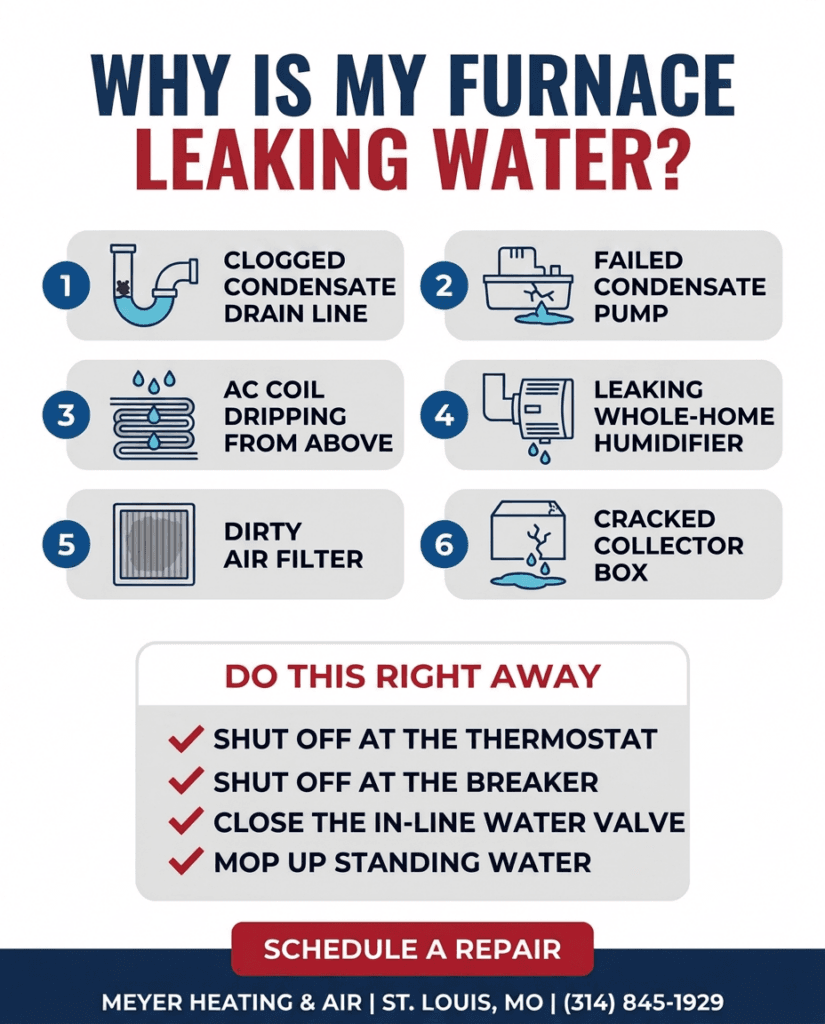
When water begins accumulating around your equipment, diagnosing the root cause requires checking the condensation lines, secondary appliances, and cooling coils. Here are six common reasons why a furnace leaks water.
1. Clogged Condensate Drain Line or Internal Drain Trap
A blocked condensate drain line is the most frequent cause of water leaking from a high-efficiency condensing furnace. As condensation trickles through the internal plastic trap and into the exterior PVC drain pipe, it carries along tiny traces of dirt, airborne dust, and bacterial sludge. Over multiple heating seasons, this debris forms a stubborn plug. When water cannot flow through the pipe, it backs up into the internal collector box and overflows onto your floor.
2. Broken or Disconnected Condensate Pump
If your furnace is located in a basement or in an interior closet where gravity cannot drain water outside, your system relies on an electric condensate pump. The pump reservoir collects runoff water until a float switch activates the motor, pushing water up and through a small vinyl tube to an exterior drain. If the pump motor burns out, loses electrical power, or gets jammed with algae, the reservoir overflows, creating a substantial puddle beneath your furnace.
3. Water Leak from Furnace When the AC is On
If you notice water around your furnace during late spring or summer, your furnace is not the culprit. In split-system HVAC designs, the indoor air conditioning evaporator coil sits directly on top of the furnace cabinet. During hot weather, the cooling coil pulls gallons of moisture out of your indoor air. If the air conditioner drain pan rusts through, or if the cooling condensate line clogs, water spills over the pan, runs down through the furnace interior, and pools at the bottom of the heating cabinet.
4. Leaking or Clogged Whole-Home Humidifier
Many homeowners install a bypass or power humidifier directly onto the furnace supply or return ductwork to combat dry winter air. These units connect directly to your household plumbing supply. If the internal water panel becomes clogged with hard mineral scale, the solenoid valve cracks, or the overflow drain tube becomes kinked, water will run down the outside of the ductwork and drip around the base of the furnace.
5. Can a Dirty Filter Cause a Furnace to Leak Water?
Yes, a dirty air filter can lead to water pooling around your furnace, particularly if your system shares ductwork with a central air conditioner or heat pump. A clogged filter blocks air from circulating freely through your system. During the cooling season, low airflow causes the evaporator coil sitting above your furnace to freeze into a solid block of ice. When the system shuts down, that ice melts rapidly, overwhelming the drain pan and sending gallons of water rushing through your furnace panels.
6. Cracked Condensation Collector Box or Secondary Heat Exchanger
In high-efficiency gas furnaces, condensation collects inside an internal plastic box before flowing to the drain trap. Over years of thermal expansion and contraction, plastic collector boxes can warp or develop hairline stress fractures. Even worse, if the secondary heat exchanger corrodes and cracks, acidic condensation leaks directly into the interior blower compartment, leading to water leaking from the bottom seams of the furnace cabinet.
Can a Furnace Leak Water from the Bottom?
Yes, water frequently appears to leak from the very bottom of the furnace cabinet. Because liquid naturally follows gravity, water originating from higher components, such as a cracked secondary heat exchanger, a loose inducer motor assembly, or a clogged internal drain pan, drips downward through the metal chassis.
Water leaking from the bottom of a furnace is particularly dangerous because it often flows directly across the internal blower motor, electrical circuit boards, and safety switches. Left unaddressed, bottom water leaks lead to electrical short circuits, ruined insulation, and heavy structural corrosion.
Immediate Steps to Take When Your Furnace Is Leaking Water
If you discover pooling water around your heating system, taking fast, decisive action minimizes property damage and protects your electrical equipment:
Turn Off the System at the Thermostat
Switch your heating and cooling controls to the OFF position immediately. Shutting the system down halts active combustion and stops the generation of new condensation. If the leak is related to air conditioning coils freezing over, turning off the system prevents more ice from building up.
Shut Off Electrical Power to the Equipment
Flip the dedicated power switch mounted directly on the side of your furnace cabinet, or switch off the heating circuit breaker inside your main electrical panel. Cutting power prevents live electrical current from contacting standing water, protecting vital components like the blower motor, ignition control modules, and circuit boards from short circuits or fire hazards.
Clean Up Standing Water Promptly
Use towels, mops, or a wet-dry vacuum to clear pooled water off your utility floor, baseboards, and drywall as quickly as possible. Rapid water cleanup stops liquid moisture from soaking into structural subflooring, preventing long-term wood rot and eliminating the damp conditions required for toxic mold colonies to germinate.
Check and Inspect the Air Filter
Slide out your return air filter to see if it is clogged with thick dust, lint, or pet hair. A heavily restricted filter suffocates airflow across the coils and heat exchangers, leading to coil freeze-ups or heat exchanger overheating. If the filter is dirty, replace it with a fresh, properly sized pleated filter.
Contact a Certified HVAC Technician
Because high-efficiency furnace condensation is mildly acidic and standing water can damage internal combustion chambers, schedule a professional diagnostic inspection. A certified technician uses specialized tools to clear stubborn drain line clogs, inspect plastic collector boxes for hairline fractures, and verify the physical integrity of your secondary heat exchanger.
Trust Your Heating Repairs to Meyer Heating and Air
A leaking furnace should never be ignored. Whether the problem stems from a simple algae clog inside a PVC line or a cracked internal heat exchanger leaking from the bottom of your cabinet, identifying the exact source requires specialized diagnostic tools and professional training.
At Meyer Heating and Air, our certified technicians bring decades of hands-on experience to every heating and cooling challenge. If you are experiencing pooling water or heating issues, our local team provides dependable hvac repairs in University City and comprehensive heating and cooling services in Wildwood. We arrive promptly, diagnose the root cause of your system leak, and restore safe, reliable warmth to your home.
Contact Meyer Heating and Air today to schedule your furnace diagnostic appointment and protect your home from costly water damage!
Frequently Asked Questions
Can a furnace leak water when the heat is turned off?
Yes. If the heat is off and your air conditioner is running, the cooling evaporator coil mounted above your furnace is producing condensation. If that drainage pathway is blocked, water will drip straight through the idle furnace. Furthermore, attached humidifiers or plumbing pipes running overhead can leak water onto the furnace regardless of whether the system is active.
Is water leaking from a furnace dangerous?
Yes, standing water around heating equipment presents multiple hazards. Water touching electrical components can cause short circuits, blown fuses, or shock risks. In high-efficiency gas furnaces, the condensate is mildly acidic and can eat away at metal framing. Unaddressed water leaks also create an ideal environment for toxic mold and wood decay.
Why is my high-efficiency furnace leaking water in the winter?
High-efficiency furnaces produce condensation naturally as part of the heating cycle. If water is pooling around the unit during cold weather, your condensate drain line, internal P-trap, or electric condensate pump is clogged or malfunctioning, preventing water from escaping outdoors.
Can I clear a clogged furnace drain line myself?
If you have a clear PVC access tee on your exterior drain line, pouring a mixture of warm water and distilled white vinegar can dissolve minor algae buildup. However, if the clog is located deep inside the furnace cabinet, within the internal collector box, or inside a sealed secondary heat exchanger, a certified technician should clear the system using professional vacuum equipment.